Meta Description: Smart Travel tips–Health Updates help you Explore safely while travelling the world and protecting yourself from new evolving viruses. Read about 12 tried-and-true tips for healthy travel in 2025.
12 Smart Travel Tips via Health Updates for Newly Viruses Protection
Traveling is exciting. New places, new people, new food — it’s one of life’s greatest pleasures. But in the 21st century it also carries health risks that a generation ago didn’t exist. New viruses pop up fast. They also spread across borders more quickly.
Whether you are traveling to another country or just a few states over, keeping up with health developments is no longer an option — it’s a necessity. The good news? It pays off to do some preparations in advance.
This guide unpacks 12 smart travel tips that help you get ahead of viral threats, with the latest health updates as your travel buddy. These aren’t overly complicated rules. They’re practical steps that work.
Why Travelers Need to Hear More About Health Updates
The world has changed. COVID-19 taught us how rapidly a new virus can transform an everyday journey into a health crisis. In the years since, outbreaks of Mpox, novel strains of influenza and other emerging pathogens have kept reminding us: viruses do not care about borders.
International travel is one of the fastest pathways for infectious disease transmission, according to the World Health Organization (WHO). Airports, trains, hotels and other tourist sites tend to be high-traffic areas where viruses easily find hosts.
The travelers who remain healthy are the ones who stay informed and heed that information.
Tip No. 1: Check Official Health Advisories Before Booking
Even before you hop on the internet to compare flight prices, see what health advisories are in place for your destination.
Where to look:
| Source | What It Covers |
|---|---|
| WHO (who.int) | Global outbreak alerts and disease travel notices |
| CDC (cdc.gov/travel) | Traveler health notices by country |
| Your country’s ministry of health | Local travel health advice |
| ECDC (ecdc.europa.eu) | European disease surveillance data |
The approach utilized by the CDC is a three-level system: Level 1 (practice normal precautions), Level 2 (practice enhanced precautions) and Level 3 (avoid non-essential travel). Those levels shift in response to current activity of the virus.
Get into the habit of checking these sites at least two weeks before you travel — and a final time three days before you go. Conditions change quickly.
Tip 2: Be Vaccinated for Where You’re Going, Not Just Where You Live
Your home country’s regular vaccine schedule is a baseline, not an endpoint.
The viral threat in a region can vary from another region. Traveling to Southeast Asia? Yellow fever, Japanese encephalitis and hepatitis A are real threats. Heading to sub-Saharan Africa? The list now adds meningococcal disease and typhoid.
Vaccines You Should Talk to Your Doctor About
- Flu vaccine — Revised yearly and applicable almost everywhere
- COVID-19 boosters — Still recommended for overseas travel
- Hepatitis A and B — Asia, Latin America, and Middle East
- Yellow fever — Sometimes required for entry in some countries
- Japanese encephalitis — For trips to rural Asia longer than a month
- Rabies pre-exposure — For outdoor adventurers in endemic areas
See a travel medicine clinic 4 to 6 weeks before scheduled departure. Other vaccines require multiple doses over the course of several weeks to be effective.

Tip No. 3: Create a Travel Health Kit That You’ll Actually Use
Most travelers bring along a basic first aid kit. That’s good. But when it comes to virus defense, you need more than Band-Aids.
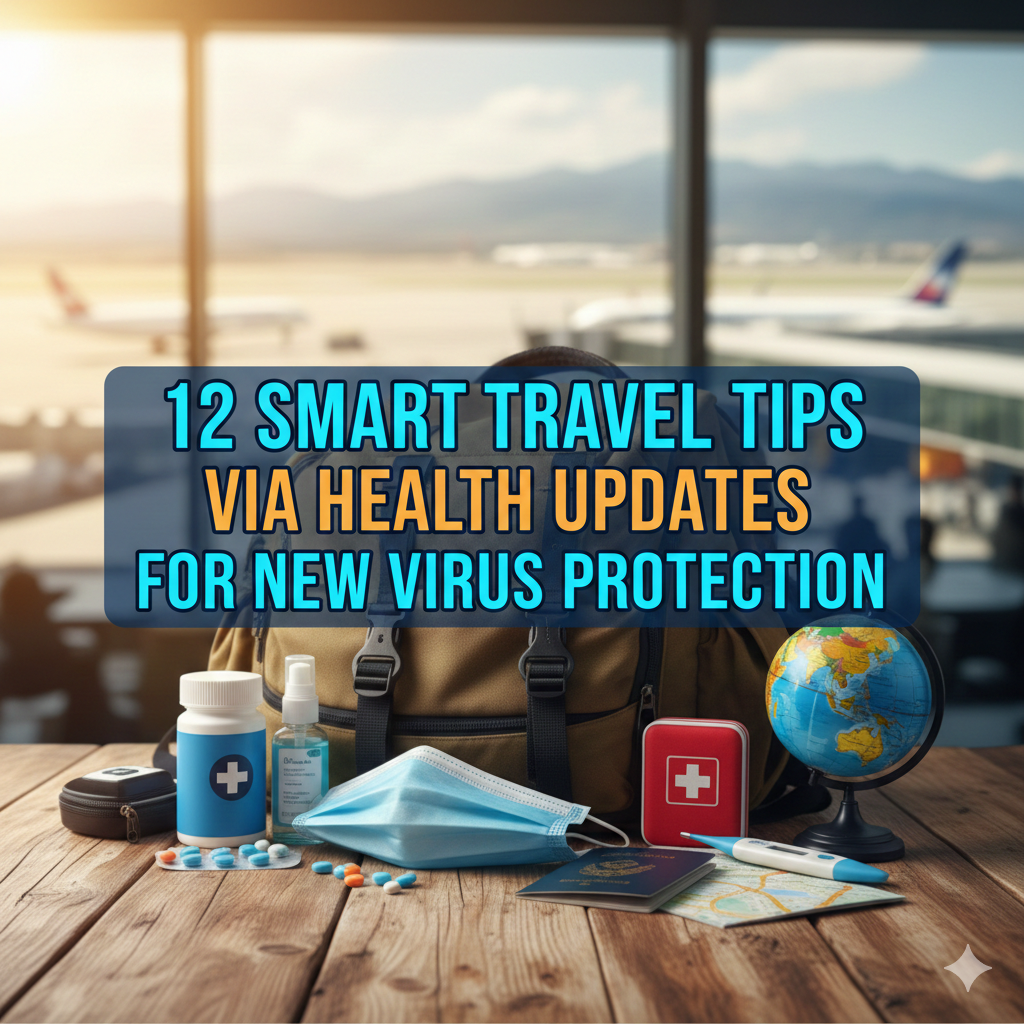
What to Pack in Your Virus-Conscious Travel Kit
Daily essentials:
- Hand sanitizer (60% alcohol content or greater)
- Disinfectant wipes (for tray tables, armrests, hotel remotes)
- Good face masks (N95 or KN95 for higher-risk environments)
- Disposable gloves
Health monitoring tools:
- Digital thermometer
- Pulse oximeter (good for detecting early respiratory problems)
Medications (consult your doctor first):
- Antiviral medications if prescribed
- Fever reducers (acetaminophen or ibuprofen)
- Antihistamines
- Rehydration salts
Documents:
- Digital and printed vaccine records
- Health insurance card
- Emergency contact list
This kit should be in your carry-on, not checked baggage. If you need it mid-flight, you will want it at your fingertips.
Tip Four: Check Real-Time Virus Tracking Apps and Websites
Health updates used to come slowly. Now they move in real time. Use that to your advantage.
Here are some tracking sites and apps that monitor activity around the world and send alerts straight to your phone.
| App/Platform | Key Feature |
|---|---|
| HealthMap (healthmap.org) | Real-time outbreak map with links to news |
| ProMED Mail | Early warning system for infectious disease professionals |
| Outbreaks Near Me | Crowdsourced disease reporting by location |
| TravelHealthPro | UK-based travel health advice per country |
| WHO Disease Outbreak News | Official WHO alerts for confirmed outbreaks |
For the most reliable and regularly updated virus and outbreak information, you can also visit Daily Health Updates — a trusted resource for travelers looking to stay ahead of emerging health threats worldwide.
Home in on alerts that only cover your destination country. If a new virus cluster arises while you’re already traveling, you’ll learn about it before it hits the mainstream news.
Tip 5: Redefine Your Approach to Eating and Drinking While Traveling
Foodborne illnesses and waterborne viruses are among the most common problems in travel health. Some of the nastier new gastrointestinal viruses — norovirus variants, for one — are transmitted through contaminated food and water.
Overview of the Safe Eating Framework for Travelers
Eat this:
- Freshly cooked food served hot
- Whole fruits (banana, orange, mango)
- Bottled or sealed water from trusted brands
- Pasteurized dairy products
Avoid this:
- Meat and seafood that is raw or undercooked
- Ice from unknown water sources
- Street food that has been sitting out
- Vegetables washed in tap water in high-risk locales
The old adage still applies: boil it, cook it, peel it or forget it.
Pack water purification tablets as a failsafe. They’re lightweight and can keep you from getting seriously ill in remote areas where there’s no bottled water.
Tip #6: Excelling in Hygiene at Hotspot Areas
Airports, train stations and tourist attractions are breeding grounds for viruses. Not because they’re dirty, but because thousands of people from dozens of different regions pass through them daily.
High-Touch Surfaces to Always Clean
- Airplane tray tables (studies found more germs here than on toilet handles)
- Security bins at airport checkpoints
- Hotel TV remotes and light switches
- Elevator buttons
- ATM keypads
- Public bathroom door handles
Before you use these surfaces, wipe them. Wash your hands for 20 seconds with soap after you touch them. Avoid touching your face until you’ve cleaned your hands.
Just this one habit — keeping unwashed hands away from your face — prevents a very large number of respiratory and gastrointestinal viruses from transmitting.
Tip 7: Maintain Peak Immune System Performance Pre- and During Travel
The healthiest preparation takes place weeks before you step on a plane.
A robust immune system does not mean you won’t meet a virus. It means your body is more likely to fight it off rapidly.
Immunity-Boosting Pre-Trip Habits That Are Proven
Sleep: Aim for 7 to 9 hours a night in the two weeks before travel. Lack of sleep measurably reduces immune response.
Nutrition: Fill up on fruits, vegetables and lean proteins. Vitamins C, D and zinc all have direct roles in immune defense.
Exercise: Regular moderate exercise (30 minutes, 5 days a week) accelerates immune cell activity. Avoid extreme workouts immediately before you travel — they temporarily suppress immunity.
Stress management: Chronic stress promotes high cortisol, which lowers immune function. Practice breathing exercises, meditate or do what feels right for you.
Hydration: Dehydration can dry out the mucous membranes in your nose and throat — these are the first barriers to airborne viruses.
If you are traveling, attempt to keep these same habits even if your schedule is off. Sleep on overnight flights. Drink water rather than alcohol on planes.
Tip 8: Be Aware of the Early Signs of Emerging Virus Threats
One of the most underrated travel health tips is knowing what to look out for.
Different viruses show up differently. If you have been closely following health updates for your destination, then you should be aware of what’s circulating there at the moment, and what its early warning signs are.
Symptom Quick Reference for Common Emerging Viruses
| Virus | Early Symptoms | How It Spreads |
|---|---|---|
| Influenza variants | Fever, body aches, fatigue | Airborne droplets |
| COVID-19 variants | Sore throat, fatigue, fever | Airborne, contact |
| Mpox | Rash, fever, swollen lymph nodes | Close contact |
| Norovirus | Nausea, vomiting and diarrhea | Contaminated food or surfaces |
| Dengue | High fever, severe headache and rash | Mosquito bites |
| Chikungunya | Fever and severe joint pain | Mosquito bites |
If you experience any of these symptoms when traveling, isolate yourself from other travelers. Avoid public spaces. For medical referrals, contact a local health provider or your country’s embassy.
Do not simply gut it out and hope for the best. Early detection and isolation protects you and everyone around you.

Tip 9: Travel With a Comprehensive Health Insurance Policy Covering Infectious Diseases
Basic travel insurance policies often won’t cover you for the treatment of infectious diseases, or even for emergency medical evacuation.
Be sure to read your policy carefully before you travel. Look for these specific coverages:
- Emergency hospitalization for infectious illness
- Medical evacuation with return to your home country if necessary
- Quarantine costs if you need to isolate abroad
- Trip cancellation for health emergencies including outbreaks
Some insurers have begun to exclude pandemic-related illnesses, or to add exclusions for destinations that are under active health advisories. Know your policy’s fine print.
World Nomads, Allianz Travel and SafetyWing are among the strongest options available for health-minded travelers. Always purchase insurance before you leave — you can’t buy it after an outbreak is already announced at the destination.
Tip 10: Be Smart About Masks — Not Just Compliant
Masks are no longer a vestige of pandemic times. For savvy travelers, they’re a tool — deployed strategically, not reflexively.
When Masks Make Real Sense
- On flights, particularly long-haul international routes
- In crowded indoor areas with poor ventilation
- In healthcare settings or pharmacies
- When visiting areas with ongoing respiratory virus outbreaks
- Whenever you or someone close to you is symptomatic
Which mask actually works?
When well fitted, N95 and KN95 masks filter at least 95% of airborne particles. Regular surgical masks provide adequate protection. Cloth masks offer minimal protection against fine aerosol particles.
Make sure to carry both surgical and N95 masks. Use surgical masks for general daily use. In higher-risk situations, like crowded airports or public transit, upgrade to N95.
Keep masks in a clean, sealed bag. Do not reuse a mask that’s been worn longer than 8 hours or that has gotten wet.
Tip No. 11: Follow Local Health Protocols Under All Circumstances
This tip sounds obvious. But it’s routinely disregarded by tourists who believe the rules don’t apply to them when they’re on holiday.
Local health protocols exist because local health officials understand what’s happening in their community. When masks are required indoors in a region, there is often an active health reason for it. If a beach or an attraction is closed for a disease-related reason, that closure is there for a reason.
In addition to safeguarding your own health, following these rules protects local communities — particularly in developing countries, where healthcare infrastructure is thin and a viral outbreak can overwhelm hospitals within days.
Practical advice:
Check destination entry requirements before you arrive. Some countries still demand evidence of certain vaccinations (like yellow fever) before allowing entry. Others may require health declarations or QR code-based tracking apps.
Bring physical vaccine documents and digital backups. Have them within easy reach at customs and immigration.
Tip 12: Have a Clear Plan if You Get Sick Abroad
No matter how careful you are, it is possible to get sick while traveling. Having a clear action plan removes panic and helps you respond quickly.
Your Sick-While-Traveling Action Plan
Step 1: Separate yourself from other travelers. Cancel plans for that day.
Step 2: Call your travel insurance company. Most have 24/7 hotlines. They can steer you toward approved local medical providers.
Step 3: Contact the nearest embassy or consulate of your home country. They keep lists of vetted local doctors and hospitals.
Step 4: Use telehealth if it is available. Most insurance providers offer virtual doctor visits. This is particularly useful in remote locations.
Step 5: Notify your accommodation. Responsible hotels and guesthouses can offer assistance and help mitigate exposure to other guests.
Step 6: Document everything. Save all medical receipts and reports for your insurance claim.
If symptoms suggest a serious infectious illness — high fever, severe respiratory distress, significant neurological symptoms — get emergency care immediately. Don’t wait.
Quick Glance: Your 12 Smart Travel Health Tips Explained
| # | Smart Travel Tip | Why It Stands Out |
|---|---|---|
| 1 | Check health advisories prior to booking | Avoid destinations with high-risk factors |
| 2 | Get destination-specific vaccines | Address concentrated viruses head on |
| 3 | Build a travel health kit | Be ready to handle any health situation |
| 4 | Check real-time virus tracking apps | Identify outbreaks before they make the news |
| 5 | Eat and drink safely | Prevent foodborne transmission of the virus |
| 6 | Take hygiene precautions in crowded areas | Minimize contact-based exposure to the virus |
| 7 | Boost your immune system | Build better natural defense against illness |
| 8 | Know early signs and symptoms of the virus | Act proactively before illness escalates |
| 9 | Get quality healthcare coverage | Protect yourself financially if you become ill |
| 10 | Use masks at appropriate times | Block airborne transmission of disease |
| 11 | Respect local health protocols | Protect yourself and local communities |
| 12 | Develop an action plan for getting sick abroad | Respond confidently to any illness |
FAQs: Your Questions Answered — Smart Travel Tips and Virus Protection
Q1: How frequently should I check health advisories before heading out? Look again at least two weeks before your trip and three days before departure. Health conditions can shift quickly, particularly amid active outbreaks.
Q2: Do I actually need travel health insurance if my national health plan already provides coverage? Yes. National health coverage usually doesn’t extend to foreign countries. Travel health insurance pays for emergency medical treatment, evacuation and quarantine expenses that national plans won’t cover.
Q3: What’s the single best thing I can do to not pick up a virus when I’m traveling? Hand hygiene is repeatedly ranked as the single most important individual method. Proper handwashing and avoiding face touching prevent a large percentage of both respiratory and gastrointestinal virus transmission.
Q4: Should everyone wear N95 masks whenever they travel, or only when going to places where outbreaks are occurring? You don’t need N95 masks for every trip. Use them in higher-risk contexts: long-haul flights, crowded indoor spaces, places experiencing active respiratory outbreaks or healthcare facilities. Surgical masks are sufficient for most lower-risk daily activities.
Q5: How can I know whether my destination requires specific vaccines for entry? Consult the official travel page of the destination country’s government, the CDC’s traveler’s health page or the WHO’s International Travel and Health publication. A travel medicine clinic can provide a thorough overview, too.
Q6: What if I get sick while on a flight? Notify the flight crew immediately. They’re trained for in-flight medical emergencies and can call ahead to have medical personnel waiting upon landing. Stay masked, refrain from moving through the cabin and drink water.
Q7: What foods should I avoid completely in developing countries? Raw shellfish, unpasteurized dairy, raw leafy vegetables and anything that’s served at room temperature for too long are the riskiest. Stick with hot, freshly cooked foods and fruits you peel by hand.
The Takeaway: Healthy Travel Doesn’t Have to Be Complicated — Just Consistent
You don’t have to be a doctor to avoid viruses while traveling. You require awareness, preparation and some regular habits.
Smart travel through health updates does just that — offers you a real-time, flexible method of staying healthy in your travels. The 12 tips in this guide are not limitations. They’re tools. Use them before, during and even on the ride home from your trip.
The world is worth exploring. Go see it — just go prepared.