Meta Description: 9 Real-Life Safety Lessons from Health Updates for newly Viruses Protection helps you stay safe, informed, and prepared against emerging viral threats in everyday life.
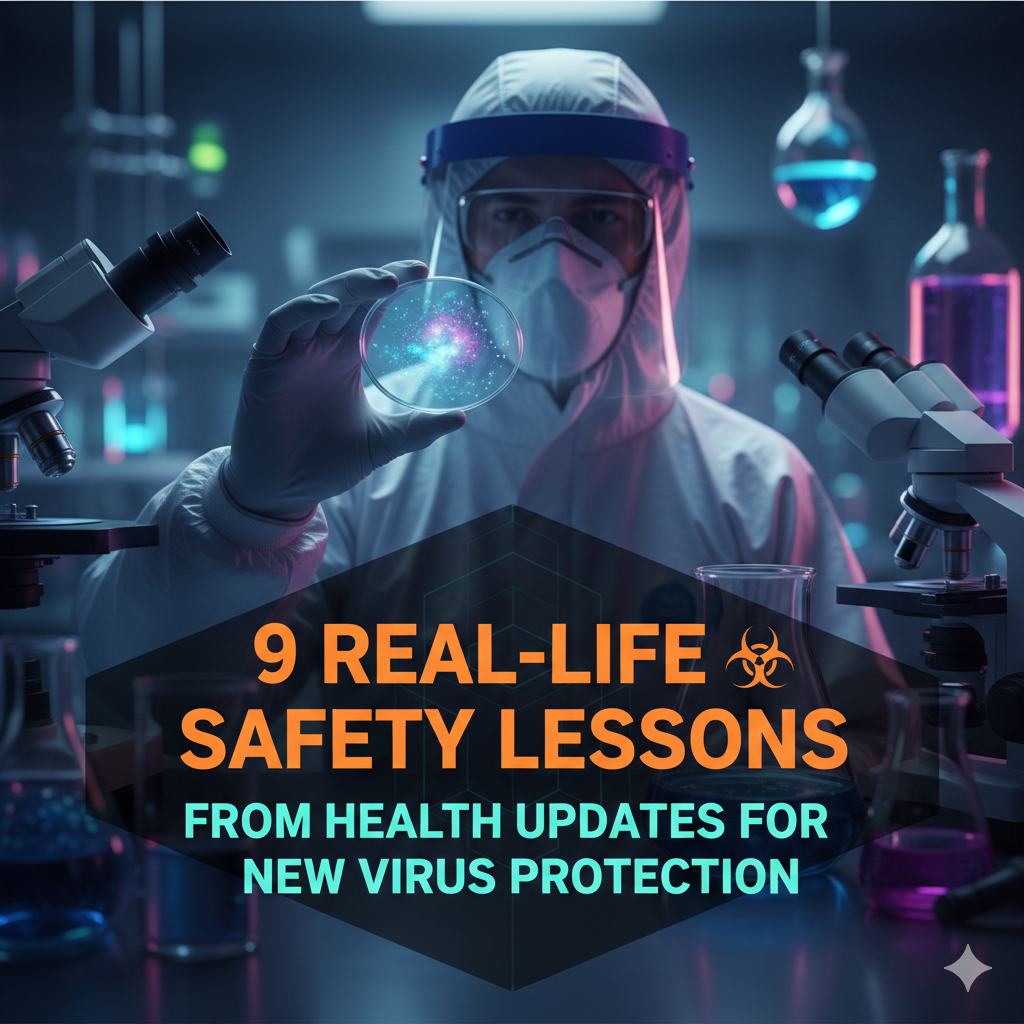
9 Real-Life Safety Lessons from Health Updates for Newly Viruses Protection
Viruses aren’t considerate and don’t wait for a good time to emerge. They can spread rapidly, evolve quickly and surprise persons. Whenever a new virus breaks into the news, most people panic or ignore it completely. Neither response keeps you safe.
The good news? Experts in health and science provide updates almost non-stop. These updates have real, practical lessons that any person can take away. You don’t require a medical degree to make sense of them. The only thing you have to do is pay attention and act upon what the data tell you.
This article distills 9 real-life safety lessons from recent health announcements. These lessons extend to newly viruses prevention in your home, your workplace, your community and beyond.
Let’s get into it.
Lesson 1: Earlier Detection Saves More Lives Than Any Medicine
It is what every major health update issued in recent years has told us. The sooner you catch a new virus, the better your odds of getting it under control.
It’s not just a question of individual health. It’s about community protection.
When health authorities spot a new strain of a virus early, they can issue warnings, prepare hospitals and distribute guidance — rather than let things spiral. The COVID-19 pandemic provided a glimpse of what can happen when early warning signs are ignored. The 2022 monkeypox outbreak demonstrated what can happen when they are taken seriously and acted on quickly.
What This Means for You
Don’t wait until you feel awful to contact a health care provider. If anything seems wrong and you’ve heard about a virus circulating in your area, get tested early. The early stages of mild symptoms is the best window for action.
Follow health alerts from authoritative sources, such as the CDC, WHO and your local health department. These organizations also post early warnings, which can give you a jump.
Lesson 2: Hand Hygiene Remains the Most Underappreciated Shield
This one is repeated on health updates. And people keep ignoring it.
Effective handwashing is a key defense against newly emerging viruses. Research shows that washing hands with soap and water for at least 20 seconds helps slow the spread of respiratory and gastrointestinal viruses by a lot.
This isn’t old advice. It’s acknowledged science, validated after every big outbreak.
How to Wash Your Hands the Right Way
Most people wash their hands the wrong way. They wash quickly without soap or skip washing altogether after touching common surfaces.
Here’s how to do it properly, according to WHO guidelines:
| Step | Action | Time |
|---|---|---|
| 1 | Wet hands with clean running water | 2 seconds |
| 2 | Apply soap and lather | 5 seconds |
| 3 | Scrub all surfaces including back of hands, between fingers, and under nails | 15 seconds |
| 4 | Rinse well under running water | 5 seconds |
| 5 | Dry using single-use paper towel or air dryer | 5 seconds |
Total time: Minimum 20 seconds
When soap isn’t available, hand sanitizer that has at least 60% alcohol is effective. But sanitizer loses every time to soap and water on actually dirty hands.
Lesson 3: Ventilation Is Your Invisible Armor
One of the major health revelations in recent years has been about airborne transmission. Many viruses — new and old — transmit through tiny droplets and aerosols that linger in the air.
Spaces with poor airflow are hotbeds for viral transmission.
How to Increase Ventilation at Home and Work
You don’t need expensive equipment. The difference comes from small changes.
Open the windows regularly to push fresh air through. Use fans to create cross-ventilation. If you work in an office, inquire about HVAC maintenance schedules. In public places, avoid sitting too far from open doors or windows when you can.
Investing in HEPA air purifiers is well worth it, too. They trap minute particles from the air and have been shown to lower airborne viral load in indoor environments.
The lesson from health updates is an easy one: fresh air protects. Stale, enclosed air spreads disease.
Lesson 4: Vaccine Updates Aren’t Optional — They’re Life Insurance
Whenever a new viral threat emerges or an existing one mutates, vaccine researchers swing into action. Updates on vaccines often get dismissed or drowned out by misinformation. That’s dangerous.
Updated vaccines are designed to target circulating strains. Getting last year’s flu shot or skipping a booster isn’t simply a personal risk — it endangers vulnerable people near you as well.
Benefits of Staying on Top of Vaccine Updates
Imagine your immune system is like a phone with outdated software. It is still functional but lacks the crucial patches that defend against new threats.
Here’s a quick rundown on how vaccines fit into newly viruses protection:
| Virus | Vaccine Availability | Update Frequency |
|---|---|---|
| Influenza | Annual | Every year |
| COVID-19 | Available | Updated for variants |
| RSV | Available for high-risk groups | Developing |
| Mpox | Available | As needed |
Check with your doctor yearly, and after any large viral outbreak declaration. Stay informed. One updated vaccine can separate a mild illness from a hospitalization.
Lesson 5: Mask Wearing Still Works When It Matters Most
Masks became a culture war. That’s too bad, because the science on them is quite clear.
Health updates from several global health organizations have confirmed that wearing masks correctly — N95 and KN95 types in particular — significantly cut the transmission of airborne viruses. Surgical masks give less protection but still provide benefits. Cloth masks are least effective.
Who Should Wear a Mask, and When?
You don’t have to wear a mask every day for the rest of your life. However, there are particular scenarios where it makes sense for newly viruses protection:
- In closed, poorly ventilated spaces in the midst of an active outbreak
- When you are sick, to stay at home and not go to work, class, or public spaces
- When caring for someone who is sick
- In high-risk healthcare or care facility settings
- After coming back from traveling during a viral surge
The key is situational awareness. Know when risk is elevated. Have a quality mask available. Use it when it counts.
Lesson 6: Mental Stress Weakens Your Body’s Defense System
This one surprises people. However, health updates in immunology have very much illustrated this.
Chronic stress increases your body’s cortisol levels. High cortisol suppresses your immune system over time. A compromised immune system has a harder time fighting off new viruses. This link is supported by science and increasingly acknowledged in public health guidance.
How to Reduce Stress for Better Immune Health
You don’t need to sit on a mountain to meditate. Simple, consistent habits work.
The most important one is sleep. Adults require between 7–9 hours each night. While you sleep, your immune system releases proteins known as cytokines that fight infection and inflammation. Short-sleeping also shortchanges your immunity.
Other effective stress reducers:
- 30 minutes of exercise every day (walking counts)
- Restricting news to certain, brief time intervals
- Spending time outdoors
- Maintaining social connections
- Reducing alcohol and caffeine overuse
Real stress management is part of newly viruses protection. It’s just not talked about as much as it should be.
Lesson 7: Travel Awareness Can Stop Viruses at Your Front Door
Many viruses start in specific geographic areas before spreading. The WHO and the CDC regularly post travel health notices that most people never read.
This is a missed opportunity.
Tips on Using Travel Health Updates
For any international travel — or even trips within areas with active outbreaks — review current health advisories. The CDC travel health page and WHO outbreak news section are free, continually updated, and user-friendly.
Here’s what to look for:
Level 1 — Practice usual precautions Level 2 — Practice enhanced precautions Level 3 — Avoid non-essential travel
If a destination has a Level 2 or 3 advisory associated with a viral outbreak, that’s the cue to re-evaluate the trip or take additional protective precautions.
And watch what you bring home with you. It can take days or even weeks for symptoms to appear. If you traveled to a region where there was known viral transmission and you develop symptoms, let your health care provider know your travel history right away. That one detail can alter your diagnosis and safeguard those around you.
Lesson 8: There Is a Direct Link Between Food Safety and Zoonotic Viruses
Many newly emergent viruses — some of the most dangerous in recent history — are those that spill over from animals to humans. These are called zoonotic viruses. Health updates from agricultural and health departments have been increasingly highlighting this connection.
Ebola, SARS, MERS, COVID-19 and bird flu — all zoonotic. Everything began at the animal-human interface.
How to Lower Your Risk From Zoonotic Viruses
You don’t need to give up eating meat or avoid all animals. But some practices genuinely matter.
Cook meat thoroughly. Heat kills viruses. Use a food thermometer. Poultry should reach 165°F internally. Ground beef at least 160°F.
Avoid raw or undercooked eggs and seafood when zoonotic outbreaks are circulating in your area.
Wash produce carefully. Some viruses can survive on fresh surfaces if a food is contaminated at its source.
Avoid contact with wild animals and sick or dead farmed animals, particularly where hygiene is poor in live-food markets.
Wash hands after handling pets, particularly reptiles, birds and rodents, which carry a greater risk of zoonotic transmission.
These food safety habits tie straight to newly viruses protection at its most elemental — stopping the virus before it even has a chance to infect you.
Lesson 9: Staying Informed Without Getting Fooled
Health updates are only helpful if you’re receiving them from trustworthy sources. The viral spread of false health information is just as dangerous as the spread of a real virus.
In each of the past decade’s outbreaks, misinformation outpaced the virus itself. Spurious cures, false details of transmission and conspiracy theories did real damage — people shunned effective treatments and delayed seeking help.
For reliable, consistently updated virus and health news, Daily Health Updates is a valuable resource to bookmark and check regularly.
How to Find Good Health Information and Avoid Bad
Ask who is publishing it. Peer-reviewed journals, government health agencies, and major medical institutions are reliable. Random social media accounts, unverified blogs and influencers without medical credentials are not.
Check the date. Health guidance evolves in light of newer data. Two-year-old information might not align with current knowledge about a new virus.
Look for citations. Good health information cites studies, data, or official guidance. Vague claims without sources are red flags.
Cross-reference. If you see an alarming headline make the rounds, go to two or three other trusted sources before assuming it is true and sharing it.
Here’s a quick guide:
| Source Type | Reliability Level | Examples |
|---|---|---|
| Government health agencies | High | CDC, WHO, NHS |
| Peer-reviewed journals | High | NEJM, The Lancet, JAMA |
| Major hospitals/universities | High | Mayo Clinic, Johns Hopkins |
| News outlets with medical staff | Moderate | Reuters Health, AP Health |
| Social media posts | Low | Facebook, TikTok, X/Twitter |
| Anonymous blogs | Very Low | Unknown |
Stay informed for protection against newly viruses. But you’ve got to be discerning about where your information originates.
The Bottom Line: A Simple Daily Protection Routine
You now have 9 real lessons from actual health updates. Here’s how to make them work in daily life without getting overwhelmed.
Morning Habits
- Wash your hands before touching your face or preparing food
- Check a quick health update from a trusted source if something is going around in your area
- Take any prescribed or recommended medications or vitamins
During the Day
- Ventilate your workspace
- Do not touch your face when out in public
- Use hand sanitizer or wash hands thoroughly after touching high-contact surfaces (door handles, elevator buttons, shopping carts)
Evening Habits
- Wind down to reduce stress
- Get 7–9 hours of sleep
- Have a healthy meal — your immune system needs to be fueled properly
This isn’t a complicated checklist. It’s simply good habits built from what health updates actually recommend.
FAQs: Defense Against New Viruses and Health Updates
Q1: How often do I need to check health updates about new viruses? A quick check once or twice a week should suffice for most people. Check daily if there’s a current outbreak in your area. Use the CDC or WHO as your primary resources.
Q2: Are newly discovered viruses inherently more dangerous than known ones? Not necessarily. Some newly discovered viruses are benign. Others are severe. How dangerous a virus is depends on how transmissible it is, its mortality rate and what treatments exist. As data arrives, health updates will indicate risk levels.
Q3: Will a healthy lifestyle really protect me from new viruses? Yes, significantly. A robust immune system does not make you invulnerable, but it equips your body with much-improved tools against infection. There are documented immune benefits of sleep, nutrition, exercise and stress management.
Q4: Should I stockpile drugs to protect against new viruses? Follow only the guidance of health authorities. Stockpiling certain medications when they are not necessary creates shortages for persons who require them. Keep a basic stock of fever reducers, hydration salts and a thermometer at home.
Q5: How can I tell if a new virus is in my community? Visit your local health department’s website or subscribe for alerts. The CDC and WHO also keep ongoing maps of outbreaks and regional advisories that are updated regularly.
Q6: Should I travel during a viral outbreak? It depends on the destination and the virus risk levels. Verify current travel warnings before booking. If you do need to travel, observe all recommended precautions such as masking and hand hygiene, and watch for symptoms after your return.
Q7: If I think I’ve been exposed to a new virus, what should I do? Contact your healthcare provider immediately. Don’t self-diagnose using social media. In the meantime, stay away from vulnerable people in your home. During active outbreaks, most health departments have hotlines.
Final Thoughts
New viruses will keep emerging. That is the reality of inhabiting a planet in which microbes are continually evolving. But panic doesn’t protect you. Knowledge does.
Every lesson in this article is drawn from genuine health updates — released by scientists, epidemiologists and public health officials whose professional lives are spent working to protect people like you.
Newly viruses protection isn’t about fear. It’s about preparation. It is about washing your hands properly, knowing when to mask up, eating safe food, managing stress and being truly informed.
Small habits, repeated consistently, provide powerful protection. You don’t have to reinvent your life. You only have to apply these 9 lessons and make them a habit.
The next health update you read won’t just be news. It will be actionable information you now know how to use.