
A comprehensive review published in the journal Carcinogenesis in March 2026 concluded something that a lot of researchers had been building toward for years: nicotine vaping is likely to cause lung cancer and oral cancer.
Not “may increase risk.” Not “further study is needed before conclusions can be drawn.” Likely.
The team, led by researchers at UNSW Sydney, analyzed over 100 studies published since 2017. They deliberately excluded research that compared e-cigarettes to cigarettes, or that pooled dual users together, because they wanted to evaluate vaping independently, not in comparison to something else. What they found, across human biomarker data, animal experiments, and chemical analyses of vaping aerosol, was a consistent and concerning picture.
I think this finding deserves a careful, factual walkthrough, because there’s a lot of noise around vaping and not nearly enough precision. So let’s go through what the evidence actually says, what the gaps are, and where people tend to misread the situation.
1. The “Safer Alternative” Narrative Has Always Had a Flaw
When e-cigarettes arrived in the early 2000s, the pitch was simple. No combustion, no tar, no carbon monoxide. A cleaner way to get nicotine than inhaling tobacco smoke. And relative to burning cigarettes, there was something to that comparison.
But “cleaner than cigarettes” slowly became “safe,” and those are not the same claim.
Vaping heating coils reach temperatures of 200 to 300 degrees Celsius. At those temperatures, the base liquid, typically propylene glycol and vegetable glycerin, breaks down into compounds including formaldehyde, acetaldehyde, and acrolein. Flavoring chemicals, which vary widely by product and brand, introduce additional reactive compounds. The metal coils themselves corrode and leach nickel, chromium, and lead into the aerosol. None of these are biologically neutral, and the “safer than smoking” frame meant that research for years focused on the comparison to cigarettes rather than asking what vaping does entirely on its own.
The UNSW review was specifically designed to close that gap. The researchers excluded dual-user studies and studies that used cigarette smoking as a comparison benchmark. Their question was narrower and more direct: what does vaping do, independently, to the body?
2. What the Evidence Actually Found Across Three Domains
The review drew from three categories of scientific evidence, and each one told a consistent story.
Human biomarker studies measured markers of biological harm in people who vape, including DNA damage, oxidative stress, and inflammation. One study found a 30% increase in oxidative stress after a single vaping session. A 2025 systematic review in Tobacco Induced Diseases, which covered studies from July 2021 through December 2023, found that all included studies reported a significant increase in oxidative stress following nicotine e-cigarette exposure. All of them. DNA damage due to formaldehyde in the upper airways was flagged in that review as a potential contributor to nasopharyngeal and lung cancer risk specifically.
Animal studies went further. Mice exposed directly to vaping aerosol developed lung tumors. That kind of result, combined with the human biomarker data, moves a hypothesis from “theoretically plausible” to something researchers are willing to state explicitly.
Lab analyses of the aerosol compounds identified multiple recognized carcinogens and traced the biological pathways through which they cause cellular damage.
The UNSW team’s conclusion after reviewing all three lines of evidence: “Considering all the findings, from clinical monitoring, animal studies, and mechanistic data, e-cigarettes are likely to cause lung cancer and oral cancer.”
The review also noted case reports of heavy vapers developing aggressive oral cancers without the typical risk factors like tobacco smoking or HPV infection. Some were unusually young patients with unusually severe disease. Not a common occurrence, but a pattern researchers flagged as worth tracking.
3. The Chemicals: A Quick-Reference Chart
When researchers discuss vaping aerosol carcinogens, the conversation tends to stay abstract. Here’s a plain breakdown of what has been consistently identified and what each compound does biologically:
| Compound | How It Gets Into the Aerosol | Biological Effect |
|---|---|---|
| Formaldehyde | Thermal breakdown of propylene glycol/glycerin at high heat | DNA damage in upper airways; linked to nasopharyngeal and lung cancer risk |
| Acetaldehyde | Thermal breakdown of vape liquid | Mutagen; damages cellular DNA |
| Acrolein | Thermal breakdown of glycerin | Damages cilia lining the respiratory tract; reduces clearance of inhaled particles |
| Volatile organic compounds (VOCs) | Flavoring agents and chemical additives | Cause oxidative stress, cellular membrane damage |
| Nickel, chromium, lead | Corrosion of heating coils during repeated use | DNA strand breaks; linked to lung and kidney toxicity |
The consistent thread across almost all of these is oxidative stress and chronic inflammation. Both processes, running at low levels over months and years, create conditions where abnormal cell behavior can develop without obvious early warning signs. Chronic inflammation is one of those background health issues that doesn’t announce itself, it compounds quietly. If you want to understand why that matters beyond vaping, the piece on chronic inflammation at Daily Health Updates explains how these same mechanisms drive a broader range of long-term health consequences.
4. Two Arguments That Don’t Hold Up to the Evidence
There are two positions I come across consistently when this topic comes up. Both are worth addressing directly.
“I only vape, I don’t smoke, so I’m not in the same risk category.”
This may be true if you’re comparing your risk to someone smoking a pack a day. But lower than a comparison group is not the same as low. The UNSW review specifically studied people who vape without smoking, and still found the biological markers of DNA damage and oxidative stress. The argument that vaping is safe for people who have never smoked is simply not supported by the evidence that exists now.
“I’m vaping to quit smoking, so the net benefit outweighs any risk.”
This is the argument that’s hardest to dismiss entirely, because there is evidence that vaping can help some people reduce cigarette use, at least in the short term. But there’s a gap between what the research actually says and how this argument usually gets deployed.
A 2021 meta-analysis of 25 studies found that young people who start vaping are three times more likely to become regular cigarette smokers than those who don’t vape. That’s not a cessation outcome, that’s the opposite. And a 2024 study found that people who both vaped and smoked had a four-fold higher risk of lung cancer than those who only smoked. Four-fold. Meaning that incomplete switching, which is common, isn’t a safer middle ground. It may be a more dangerous one.
This is a good example of a pattern that Daily Health Updates has covered in the context of wellness information generally. A claim that’s partially true gets circulated as though it’s the whole picture. The cessation angle is real. The cancer risk angle is real. Presenting only one of them is exactly the kind of incomplete framing that this piece on why online health advice is often only partly true walks through in detail.
5. What the Research Leaves Incomplete, And Why That Matters
I want to be specific about the limitations here, because the evidence is real but incomplete in ways that affect how to interpret it.
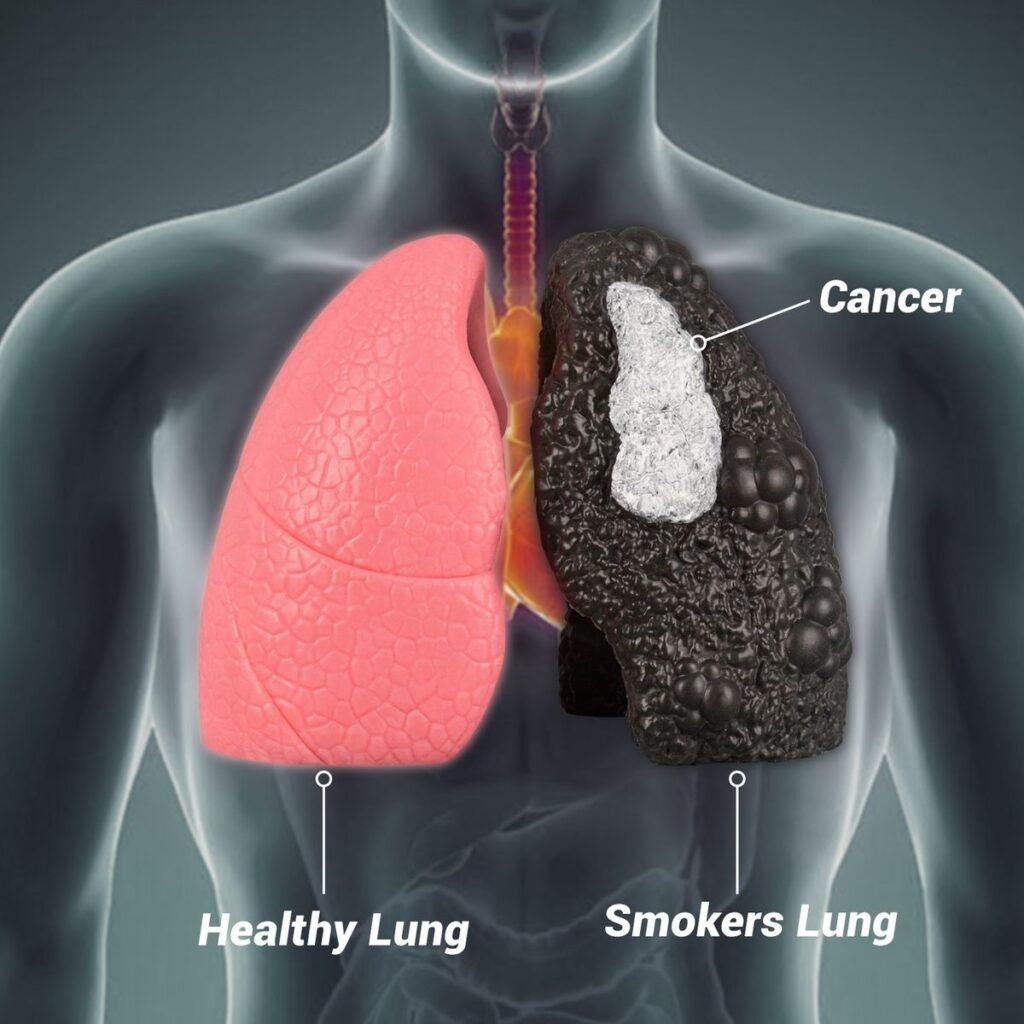
We don’t yet have large-scale population data tracking vapers over decades. Lung cancer typically takes 15 to 30 years to develop from initial carcinogen exposure, and vaping as a mainstream behavior is roughly 15 to 20 years old. The populations who started young are only now entering the age ranges where lung cancer rates begin to rise, so the epidemiological data is still accumulating.
There’s also a device heterogeneity problem worth noting. The aerosol from a 2008 first-generation e-cigarette is chemically different from a modern nicotine salt pod device, the heating coil materials differ, nicotine concentrations differ, flavoring compounds differ. Most of the studies in the UNSW review used devices that may not closely resemble what’s currently in widespread use. That makes precise risk quantification genuinely difficult.
None of this changes the review’s conclusion. The researchers acknowledged these limitations explicitly and still concluded likely carcinogenicity. But it’s the reason why they framed it as “likely” rather than “proven” in the same way that cigarettes and lung cancer are now proven.
What they’re clear on, though, is what we shouldn’t do, which is wait. It took roughly 100 years from tobacco’s widespread adoption until the 1964 Surgeon General’s report formally linked smoking to lung cancer. As the review’s authors noted, we should not wait another 80 years to act on vaping. The early biological signals are strong enough, consistent enough, and from enough independent research groups that sitting on this until the population data catches up would repeat a well-documented historical mistake.
Vaping compounds this with other variables that affect immune function and respiratory health. Chronic oxidative stress from chemical inhalation doesn’t exist in isolation from the rest of what the body is managing. Things like sleep quality, for instance, have measurable effects on immune defense, and poor sleep genuinely does reduce the body’s defenses against what it’s exposed to day to day. Layer that on top of chronic inhalation of carcinogenic compounds, and the body’s repair capacity faces multiple simultaneous pressures.
6. A Realistic, Non-Alarmist Takeaway
If you vape and you’re reading this, the direct recommendation is to talk to a doctor, particularly if you’ve been vaping regularly for several years. Not because this review changes your health status overnight, but because conversations about cessation options and respiratory monitoring are worth having now.
The UNSW researchers were explicit that they’re not dismissing vaping as a cessation tool for long-term smokers who have no other options and who actually switch completely. But they were equally clear that young people who have never smoked and who start vaping are taking on a risk that they didn’t need to introduce, and that regulators need to treat this with the same seriousness that eventually, slowly, got applied to cigarettes.
For people using vaping to quit smoking, there are pharmacological cessation options with robust evidence behind them, including varenicline and nicotine replacement therapy. A doctor or pharmacist can help identify which one fits best. That conversation is more useful than the assumption that vaping occupies a safe middle zone between smoking and not smoking.
The science here is still being actively generated, that’s genuinely true. But the early chapters are not good news, and the researchers who wrote this review are explicit that the evidence is already strong enough to act on. If you want a broader look at what’s actually weakening immune function on a day-to-day basis, this post on things that compromise your immune system covers several of the same underlying mechanisms, including chronic inflammation and oxidative load, that keep appearing in the vaping research.
FAQs
Does vaping definitely cause lung cancer?
The most comprehensive review to date, published in Carcinogenesis in March 2026 and covering over 100 studies, concluded that e-cigarettes are “likely to cause lung cancer and oral cancer.” That stops short of “definitively proven” because we don’t yet have decades of large-scale population data. Lung cancer takes a long time to develop, and vaping as a mass behavior is still relatively new. But the biological and experimental evidence is consistent across multiple research groups and disciplines.
How does vaping’s cancer risk compare to cigarette smoking?
The carcinogen profiles are different. Cigarette smoke involves combustion and produces tar, carbon monoxide, and polycyclic aromatic hydrocarbons alongside other carcinogens. Vaping produces a different mix: formaldehyde, acetaldehyde, heavy metals from heating coils, and compounds from flavoring agents. The risk level is not identical, but the 2024 finding of a four-fold higher lung cancer risk in people who both vaped and smoked versus those who only smoked tells you that dual use carries serious compounding effects.
Why haven’t we seen high rates of vaping-related lung cancer yet?
Lung cancer typically develops 15 to 30 years after initial carcinogen exposure. Widespread vaping is roughly 15 to 20 years old. The people who started vaping in their teens and early twenties are only now reaching the age ranges where cancer becomes more statistically common. Researchers expect the population-level data to start emerging over the next decade.
Are some vaping products or flavors safer than others?
No e-cigarette is currently confirmed safe from a cancer risk standpoint. Some flavoring compounds introduce additional toxicants, and heating coil composition affects how much heavy metal enters the aerosol. Some studies suggest that higher-power devices generate more harmful byproducts. But the evidence isn’t yet specific enough to say that one product category is reliably safer than another.
What should someone do if they want to quit vaping?
Talk to a doctor or pharmacist about cessation options. Pharmacological treatments like varenicline (sold as Champix or Chantix) and nicotine replacement therapy (patches, gum, lozenges) have stronger evidence bases for nicotine cessation than switching between inhalation products. Behavioral support improves outcomes significantly when combined with pharmacological treatment. There are also quit lines and cessation programs available in most countries that provide structured support.