

Most people think of gut bacteria as digestive helpers. That’s fair, because that’s how it gets framed almost everywhere: probiotics for bloating, fibre for your bowel, fermented foods for your gut lining. All of that is true.
But there’s a much bigger story that doesn’t get nearly enough attention in popular health content.
Some of the bacteria living in your gut right now are not just managing digestion. They are actively training, regulating, and deploying your immune system. And the science behind how this works is genuinely surprising, even to people who follow health research closely.
1. The Belief Most People Hold About Gut Bacteria (And Why It’s Only Half Right)
A lot of people come to gut health with a simple mental model: good bacteria crowd out bad bacteria, and that’s what keeps you healthy. It sounds reasonable. It’s easy to explain, it maps onto the “balance” framing you see on probiotic labels, and it makes sense as an entry point.
But it leaves out something important.
Your immune system doesn’t just passively benefit when your gut microbiome is balanced. The bacteria in your gut are actively communicating with immune cells, signaling which threats are real and which should be tolerated, and literally shaping how aggressive or calm your immune responses are. This isn’t a side effect of having healthy gut flora.
It’s a core function.
A review published in Cell Host & Microbe noted that approximately 70% of the body’s immune cells reside in or near the gut. This wasn’t an accident of anatomy. It reflects how deeply the immune system and the gut microbiome have co-evolved over hundreds of thousands of years, each depending on the other to work correctly.
So when someone says their gut health is “fine” because they don’t have digestive symptoms, that may be true on the surface. The immune side of the picture deserves a closer look, though.
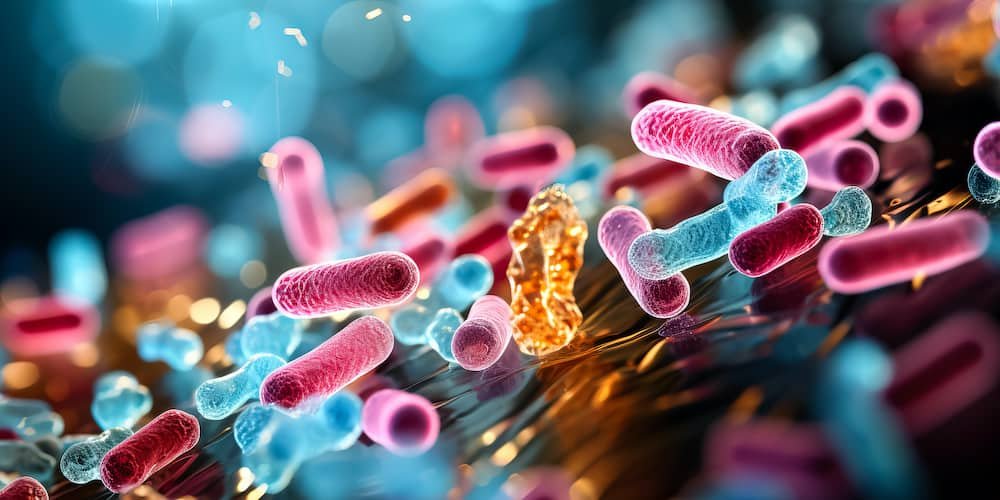
2. What These Hidden Bacteria Are Actually Doing
Behind the gut lining sits an enormous network of immune tissue called the gut-associated lymphoid tissue, or GALT. This is where much of the real action happens.
Certain bacteria produce short-chain fatty acids (SCFAs) as a byproduct of fermenting dietary fibre. Butyrate, propionate, and acetate are the three primary ones. What these SCFAs do when they reach the GALT is remarkable: they help regulate the production and behavior of regulatory T cells, or Tregs. These are the immune cells responsible for keeping inflammatory responses from spiraling.
Without enough Treg activity, your immune system starts overreacting. This is the underlying mechanism behind allergies, some autoimmune conditions, and the kind of chronic low-grade inflammation that a lot of people are walking around with without knowing it.
And it works the other way too. When your body needs to mount a real response against a pathogen, specific bacterial metabolites help prime natural killer (NK) cells and macrophages to respond faster. It’s a bit like the bacteria keeping the immune system sharp: not oversensitive, not sluggish. Ready.
This balance is more difficult to maintain than most supplement labels suggest. You can’t take a single probiotic and expect this entire regulatory system to recalibrate overnight. The truth is more interesting, and more nuanced, than that.
3. The Specific Strains That Do the Most Work for Immunity
Not all gut bacteria contribute equally to immune function. Some strains are more directly involved than others, and knowing which ones matter makes it easier to support them deliberately.
Here’s a quick-reference chart of strains with notable research behind them specifically for immune support:
| Bacterial Strain | What It Does for Immunity |
|---|---|
| Lactobacillus rhamnosus GG | Supports mucosal immune defenses; studied for reducing upper respiratory infection duration |
| Bifidobacterium longum | Helps regulate inflammatory cytokine production; supports gut barrier integrity |
| Lactobacillus acidophilus | Stimulates macrophage and NK cell activity; produces antimicrobial compounds |
| Faecalibacterium prausnitzii | Major producer of butyrate; associated with significantly reduced gut inflammation markers |
| Akkermansia muciniphila | Supports gut lining integrity; linked to better immune regulation and lower systemic inflammation |
| Bifidobacterium breve | Shown in clinical trials to increase IgA antibody secretion in the gut |
These strains appear consistently across peer-reviewed literature. That said, no single strain should be treated as a silver bullet. What the evidence supports is that diversity of these kinds of bacteria, sustained over time, correlates with stronger immune responses and lower disease susceptibility. This probably explains a lot of why some people rarely get sick while others seem to catch everything, a question explored well in the Daily Health Updates article on why some people never get sick and it isn’t just luck.
4. What Actually Depletes These Bacteria (It’s Not Only Diet)
Here is where most people go wrong.
There’s an assumption that gut bacteria are mainly disrupted by eating poorly: lots of processed food, low fibre, too much sugar. Diet is certainly a factor. But it’s far from the only one, and sometimes it isn’t even the most significant disruptor in someone’s day-to-day life.
Antibiotics are the most obvious culprit. A single course can reduce microbial diversity by an estimated 25-30%, and for many people, full recovery takes months. Some strains may not return without deliberate support afterward. This is genuinely underappreciated in clinical practice.
Chronic psychological stress is less talked about. Cortisol and other stress hormones alter gut motility and increase intestinal permeability, changing the environment that bacteria live in. Over time, this shifts the microbiome toward less beneficial compositions. The connection between stress and immune vulnerability is direct and real, and Daily Health Updates covered the mechanism behind this in depth at can stress alone make you catch more viruses.
Sleep deprivation matters more than most people realize. Even two or three nights of insufficient sleep can measurably alter the gut microbiome’s composition, creating a vicious cycle because a disrupted microbiome can itself interfere with sleep quality through effects on serotonin synthesis. Roughly 90% of the body’s serotonin is produced in the gut.
And then there’s the subtle one: chronically low dietary fibre. Not crash diets, not a fast-food habit specifically, just consistently not eating enough plants, legumes, and whole grains over months or years. Without adequate fermentable fibre, SCFA-producing bacteria like Faecalibacterium prausnitzii have nothing to ferment. They decline slowly. And immune regulation suffers quietly in the background.
5. What You Can Actually Do About It
The research here is fairly consistent. The practical recommendations align across most of the major studies, and none of it is particularly dramatic. That’s a good thing, although it can make the advice feel underwhelming next to what you’ll see on a probiotic label.
Diversity of plant foods matters more than any single supplement. Aiming for 30 or more different plant species per week, counting herbs, spices, legumes, grains, fruits, and vegetables, has been linked to significantly greater microbial diversity in large cohort studies including data from the American Gut Project. This doesn’t require expensive specialty foods. It requires variety, and some deliberate rotation of what you’re buying.
Fermented foods contribute live bacteria directly. Yogurt, kefir, kimchi, sauerkraut, miso, and kombucha all have evidence behind them. A 2021 Stanford-published randomized controlled trial found that a diet high in fermented foods increased microbial diversity more effectively than a high-fibre diet alone over 10 weeks. Both are beneficial, but fermented foods specifically added measurable diversity.
Targeted probiotic supplements can help, particularly after antibiotics or illness, but whether a specific probiotic actually colonizes your gut depends heavily on your existing microbiome. This is a case where the “right” answer is genuinely individual. The comparison between gut health supplements and immunity supplements is worth reading through at gut health vs. immunity supplements: which helps more if you’re trying to figure out where to invest.
Prebiotic foods support bacterial growth by providing fermentable substrate. Onions, garlic, leeks, slightly underripe bananas, oats, asparagus, and chicory root are among the most researched. These don’t need to appear in every meal, but they should show up regularly.
And sleep. Consistent, quality sleep. Seven to nine hours for most adults is not optional extra credit; it’s part of the system.
If you’ve been sick repeatedly and feel like your immune system isn’t bouncing back the way it should, the microbiome is one of the pieces worth looking at closely. That recovery process, and how long it actually takes, is covered over at Daily Health Updates: can you rebuild gut health after being repeatedly sick.
The gut microbiome is more responsive to change than most other systems in the body. It shifts with what you eat, how you sleep, how much stress you carry, sometimes within days. That makes it one of the more accessible parts of immune health to work with, once you understand it’s a factor at all. Most people just don’t know to look there.
FAQs
Can you actually feel it when your gut bacteria are supporting immune function better?
Not directly, and that’s part of why this gets overlooked. Most of the changes happen at a cellular level that isn’t perceptible in real time. What people tend to notice over weeks or months is getting sick less often, shorter recovery times when they do get sick, or slightly less pronounced seasonal allergy reactions. Those indirect signs are often more informative than any day-to-day feeling.
How long does it realistically take to improve gut bacteria for immune support?
Detectable shifts in microbial composition can occur within two weeks of sustained dietary changes. Meaningful changes in immune-related markers typically take four to eight weeks of consistent effort. After antibiotics specifically, full microbiome recovery may take three to six months, sometimes longer depending on the antibiotic used and the individual’s baseline diversity.
Is one probiotic enough to make a difference?
For general immune support, single-strain probiotics show mixed results across clinical trials. Multi-strain formulations tend to show more consistent outcomes, and dietary approaches that sustain microbial diversity outperform most supplemental strategies over the long term. A probiotic is one tool, not a complete solution.
Does the gut microbiome change as we age, and does that affect immunity?
Yes, significantly. Microbial diversity generally declines after around 60, correlating with a well-documented weakening of immune function called immunosenescence. Older adults who maintain higher dietary fibre intake and consume fermented foods regularly tend to show better microbiome diversity and immune markers in population studies compared to those who don’t.
| Age Group | Typical Microbiome Trend | Immune Implication |
|---|---|---|
| Infancy to age 2 | Rapidly establishing diversity | Immune system calibrating to environment |
| Adults (20-50) | Relatively stable with diet | Immune function tracks microbiome health closely |
| After 60 | Diversity often declines | Higher susceptibility to infection and inflammation |
Can a bad week of stress measurably change your gut bacteria?
Yes, and faster than most people expect. Research in both animal models and human studies has shown measurable microbiome composition shifts within 24 to 72 hours of acute stress exposure. The effects are usually reversible with recovery, but they compound when stress becomes chronic and sustained. This is one of the cleaner examples of how mental and physical health are far less separate than we tend to think.