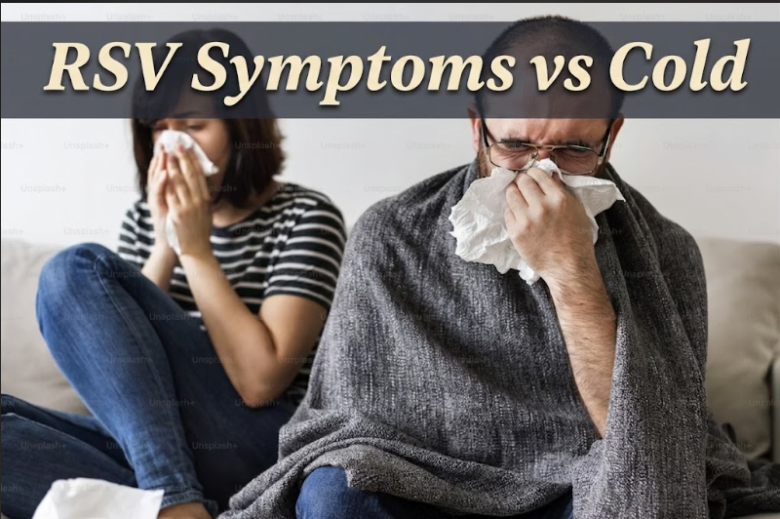
A reader sent me a message in December asking whether she should take her 7-week-old daughter to the emergency room. “She has what looks like a cold but she’s breathing faster than usual,” she wrote. “Could it be RSV? How do I tell the difference?”
That question, or a version of it, comes up regularly, and not just from new parents. Adults who get hit with a respiratory illness during virus season want to know whether what they have is RSV or a standard cold, whether it warrants any particular concern, and how long they should expect it to last. The problem is that RSV and the common cold share enough overlapping symptoms that the distinction isn’t immediately obvious from the surface.
The short answer to that reader’s question: labored breathing in a 7-week-old is an emergency room situation regardless of the cause. But the broader question, about how to actually tell these two apart, is worth understanding clearly.
1. What You’re Actually Comparing
RSV stands for Respiratory Syncytial Virus. It’s a specific single virus, and it infects the respiratory tract. The common cold, by contrast, is not a single virus. It’s a category of illness caused by over 200 different viruses, with rhinoviruses accounting for roughly half of all cases. Adenoviruses, parainfluenza viruses, and several others make up the rest.
This distinction matters because it explains something counterintuitive: RSV and a cold can look nearly identical in a healthy adult, but RSV carries substantially more risk for specific populations in ways that a typical cold virus does not.
Both viruses spread through respiratory droplets and through contact with contaminated surfaces, which is why hand hygiene and surface disinfection remain relevant for both. They both peak in late fall and winter in the Northern Hemisphere, which is part of why they get confused so often. People assume their child or elderly parent “just has a cold” when RSV is actually in circulation at the same time.
2. Symptoms Compared, One by One
The symptom lists for RSV and the common cold overlap significantly, but the overlap is not total. A few specific features consistently separate them, and those are the ones worth watching for.
RSV vs. COMMON COLD: SYMPTOM COMPARISON
----------------------------------------------------------
Symptom                    | RSV              | Common Cold
---------------------------|------------------|--------------
Runny or stuffy nose       | Yes              | Yes
Sneezing                   | Yes              | Yes
Coughing                   | Yes (can worsen) | Yes (usually mild)
Sore throat                | Mild or absent   | Very common
Fever                      | Common in children| Low-grade or absent
Wheezing or noisy breathing| Yes, common      | Rare
Shortness of breath        | Possible         | Rare
Feeding refusal (infants)  | Common           | Uncommon
Lower respiratory symptoms | Yes              | Almost never
Body aches                 | Mild             | Mild to moderate
Duration                   | 1-2+ weeks       | 7-10 days
----------------------------------------------------------
Wheezing is the most clinically useful distinguishing feature. When the airways become inflamed and narrowed from RSV, especially in young children, you can hear a high-pitched whistling or tight sound during breathing. That does not typically happen with a cold. A cold stays in the upper respiratory tract, the nose and throat. RSV can move into the lower respiratory tract, affecting the smaller airways in the lungs.
Feeding refusal or difficulty in infants is another flag specific to RSV. When a baby who normally feeds well suddenly refuses to eat or takes in significantly less, and this coincides with nasal congestion and a cough, that combination points more toward RSV than a standard cold. Infants breathe through their noses, so significant nasal congestion from RSV makes feeding difficult in a way that causes clinical concern.
Sore throat is worth noting in the opposite direction. It’s a common feature of colds and less prominent with RSV. If the dominant complaint is throat discomfort, a rhinovirus-type cold is the more likely culprit.
3. Who Actually Needs to Be Concerned
This is where RSV and the common cold diverge most significantly, and it’s the piece that doesn’t get communicated clearly enough.
For a healthy adult between the ages of 20 and 60, RSV usually produces symptoms that are indistinguishable from a mild cold. It’s uncomfortable, it lasts a bit longer than a typical cold, and it resolves on its own. Most healthy adults who get RSV never know that’s what they had.
The risk profile changes substantially for three groups:
Infants under 12 months, and especially those under 6 months, are at the highest risk for severe RSV disease. Their airways are narrow, their immune systems are still developing, and RSV is the leading cause of bronchiolitis, an inflammation and mucus buildup in the smallest airways of the lung, in this age group. In the United States, RSV is the most common reason infants are hospitalized.
Adults 65 and older experience RSV differently than younger adults. Because immune function declines with age, RSV in older adults can cause serious lower respiratory disease, including pneumonia. It causes roughly 177,000 hospitalizations and 14,000 deaths annually in adults 65 and older in the United States, according to CDC surveillance data, numbers that most people find surprising when they first see them.
Immunocompromised individuals of any age, including those receiving chemotherapy, living with HIV, or on immunosuppressive medications after organ transplant, face elevated risk from RSV for the same reasons as older adults: the immune system cannot mount an adequate defense.
For everyone outside these three groups, RSV is genuinely not something to lose sleep over. The mistake is applying that reassurance to people who fall inside these groups.
4. The Error That Gets Made Over and Over
The consistent mistake I see when people are trying to assess respiratory illness in their household is anchoring on the most optimistic explanation.
When a baby coughs and seems congested, the reflex thought is “cold,” because colds in infants are common and usually resolve without intervention. That framing is appropriate much of the time. But it causes people to dismiss signs that actually warrant a phone call to a pediatrician, specifically wheezing, breathing faster than normal, the visible use of chest and neck muscles to breathe (called retractions), any color change around the lips, or significant decline in feeding.
RSV in infants can escalate faster than parents expect. A child who seems like they have a mild cold on a Monday can be in meaningful respiratory distress by Wednesday. The progression isn’t always gradual and visible. It’s worth knowing in advance what the warning signs are rather than trying to assess them in a panic.
And this applies to older adults, too. An elderly person who develops what seems like a routine cold during RSV season should be monitored more carefully than a 35-year-old with the same symptoms. Worsening cough, shortness of breath, or fever that develops or intensifies several days in are reasons to contact a doctor rather than wait.
Daily Health Updates Org has covered related ground on the healing and recovery side of viral illness, and the practical guidance on 7 proven healing tips for virus protection is worth reading alongside the symptom picture here.
The second common mistake: assuming that testing is only for hospital situations. Rapid RSV tests are available in many pediatric and primary care offices, and some urgent care settings. The test takes about 15 minutes. For an infant during peak RSV season with respiratory symptoms, a rapid test removes the guesswork and informs the management plan, whether that means monitoring at home with clear guidance or admission for oxygen support.
5. Testing, Treatment, and What You Can Actually Do
There’s no specific antiviral treatment for RSV in most healthy patients. Management for mild to moderate RSV, like management for a cold, is supportive: fluids, rest, saline nasal drops for congestion, and comfort measures. Fever reducers are appropriate when fever is present and causing discomfort. Antibiotics do not treat RSV or any viral respiratory illness, and prescribing them for these infections is a known driver of antibiotic resistance.
For high-risk infants, treatment in a hospital setting may include oxygen support, additional fluids via IV or nasogastric tube if feeding is inadequate, and in some cases nebulized medications to open the airways. Palivizumab, a monoclonal antibody, has been used preventively in very high-risk infants such as premature babies with heart or lung conditions, though it’s not standard for all infants.
Nirsevimab (brand name Beyfortus) is a newer monoclonal antibody approved in 2023 that provides protection against RSV for infants and young children through a single injection. It’s different from a vaccine in that it delivers ready-made antibodies rather than prompting the immune system to produce them. For adults 60 and older, two RSV vaccines are now available and recommended by the CDC’s Advisory Committee on Immunization Practices: Abrysvo and Arexvy. These are worth discussing with a primary care provider, particularly for anyone in that age group with underlying heart or lung conditions.
For distinguishing cold from RSV at home without a test: watch for the features that a cold doesn’t produce. Wheezing, difficulty breathing, feeding refusal in an infant, worsening symptoms after day 4 or 5, or respiratory symptoms in a newborn all justify a call to a healthcare provider rather than watchful waiting.
The Daily Health Updates Org homepage also has additional resources on virus prevention and recovery if you want to explore this topic further from multiple angles.
Frequently Asked Questions
I’m an adult who gets sick every winter. Could some of those have been RSV and I just assumed cold?
Almost certainly, yes. RSV in healthy adults produces symptoms that are clinically indistinguishable from a cold without testing. Many adults who think they get a “bad cold” in November or December have actually had RSV. The virus circulates widely, and without a specific test, the cause of a mild upper respiratory illness rarely gets identified.
How long does RSV last compared to a cold?
A standard cold typically resolves in 7 to 10 days. RSV tends to run slightly longer, often 1 to 2 weeks, and in some cases the cough can persist for several weeks after the active infection clears, particularly in infants and older adults. If symptoms are improving overall but the cough lingers, that’s not unusual with RSV. If symptoms plateau or worsen after day 5 to 7, that’s a reason to follow up with a healthcare provider.
My child has RSV every winter. Is there something wrong with their immune system?
RSV reinfection throughout childhood is normal, not a sign of immune dysfunction. The initial immunity built after a first RSV infection is partial and wanes over time. Most children have had RSV at least once by age 2. Repeated infections in otherwise healthy children who recover normally do not indicate an immune problem. If a child is being hospitalized repeatedly or developing severe disease from RSV regularly, that warrants investigation, but annual mild to moderate RSV is expected.
Can RSV be spread by someone who doesn’t seem sick?
Yes. RSV can be transmitted for 1 to 2 days before symptoms appear, and some individuals, particularly adults, experience such mild symptoms that they don’t register as sick while still shedding the virus. This is one reason why hand hygiene and surface disinfection matter even when no one in the household is visibly unwell during RSV season.
At what point should I take a sick infant to the emergency room vs. calling the pediatrician?
Emergency room: any infant with a color change around the lips or fingertips (bluish or pale), visible retractions (the skin pulling in between or below the ribs with each breath), breathing rate faster than about 60 breaths per minute in a newborn or 40 in an older infant, or extreme lethargy. Pediatrician call: nasal congestion with noisy or labored breathing that doesn’t improve with a nasal bulb or saline drops, significantly reduced feeding over more than one feeding in a row, fever in any infant under 3 months, or any respiratory symptom in an infant under 6 weeks. If you are uncertain, err toward calling or being seen. Pediatric offices are accustomed to these calls.
The question that reader sent in December turned out to have a clear answer: her daughter had RSV confirmed by a rapid test, her breathing was borderline, and she was monitored closely for 48 hours before improving. She’s fine. But that outcome required knowing that “breathing hard” is not a symptom to file away under “probably just a cold.”