
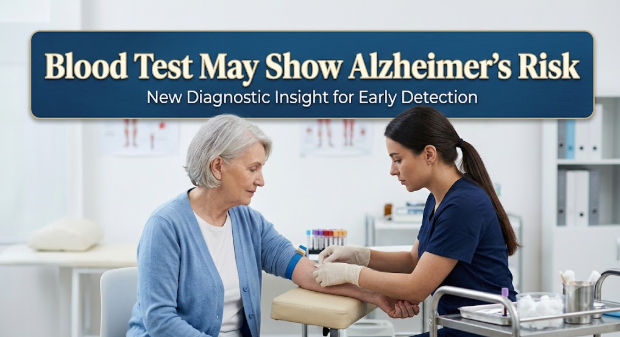
The finding stopped me when I first read it. Researchers from Mass General Brigham published data in April 2026 showing that a single blood test could predict which cognitively healthy older adults would later accumulate amyloid plaques in their brains. Not at the same time as a PET scan detected the change. Before it.
Before a brain scan could even show anything abnormal.
That’s not a small shift. If this holds up across larger studies, the window for detecting Alzheimer’s risk has moved years earlier than most people assumed was possible with practical, accessible tools. And that window matters enormously, because Alzheimer’s disease doesn’t begin when someone forgets their keys or loses a word mid-sentence. It begins a decade or two earlier, quietly, in changes to proteins circulating in the blood.
I’ve been tracking this research area for a while now, and things have moved fast. The FDA cleared the first blood-based Alzheimer’s diagnostic test in May 2025. Since then, the question has shifted from whether this kind of detection is possible to what it actually changes, for patients, for practitioners, and for people who are simply paying attention to their long-term brain health.
Here’s what the science says.
1. What the Blood Test Is Actually Measuring
The test at the centre of all this is called Lumipulse. It received FDA clearance in May 2025 for use in adults aged 55 and older who are already showing signs of cognitive decline, used in specialized clinical settings as part of a broader diagnostic evaluation.
What it measures is a ratio: phosphorylated tau 217 (p-tau217) divided by amyloid-beta 1-42. Both proteins are naturally present in human blood. The issue isn’t whether they exist. The issue is what happens to their ratio when Alzheimer’s pathology is developing.
In people with amyloid plaque buildup, p-tau217 rises and amyloid-beta 1-42 falls. The ratio shifts in a way that mirrors what researchers have historically tracked through far more invasive and expensive methods, specifically PET scans and cerebrospinal fluid (CSF) analysis via lumbar puncture. A blood draw can now produce a comparable signal.
Amyloid plaques are the protein deposits that have long been considered the hallmark of Alzheimer’s disease. They can begin forming 15 to 20 years before memory symptoms appear, which is part of why earlier detection matters so much.
Several blood biomarkers are being studied alongside p-tau217. Here’s a quick-reference breakdown of the main ones:
| Biomarker | What It Measures | What Changes May Indicate |
|---|---|---|
| p-tau217 / Aβ1-42 ratio | Phosphorylated tau + amyloid protein | Rising ratio associated with amyloid plaque presence; used in Lumipulse |
| Amyloid-beta 40/42 ratio | Two amyloid protein variants | Lower 42/40 ratio linked to plaque accumulation in the brain |
| GFAP (glial fibrillary acidic protein) | Astrocyte activation | Elevated in neurodegeneration and brain tissue injury |
| NfL (neurofilament light chain) | Axon and nerve damage | General neurodegeneration marker; not specific to Alzheimer’s |
The p-tau217/amyloid-beta 1-42 combination used in Lumipulse has the strongest clinical evidence right now. That’s why it was first to reach FDA clearance. Other assays are in the pipeline.
2. How Accurate Is It, and What Was the Old Gold Standard?
Before these blood tests existed, confirming amyloid pathology meant either a PET scan with radioactive tracers (which costs several thousand dollars, requires specialized imaging equipment, and isn’t available at every clinic) or a lumbar puncture to extract and analyze cerebrospinal fluid. Neither is something a person does casually. And neither fits into a routine primary care visit.
The Lumipulse blood test changes the accessibility piece dramatically.
In the FDA’s clinical evaluation, using 499 plasma samples from cognitively impaired adults, the test showed 91.7% positive agreement with amyloid PET or CSF results. The negative agreement was 97.3%. That second number matters a lot. It means that when someone tests negative, there’s a very high probability that amyloid pathology isn’t present at that point in time.
But here’s where I see the most significant misunderstanding in how this is being covered. A positive blood test result is not a diagnosis of Alzheimer’s disease. The FDA was explicit about this. Results need to be interpreted alongside cognitive testing, neurological assessment, and often additional imaging. False positives do occur, and acting on one could lead to unnecessary treatment, real psychological distress, and delays in finding the actual cause of someone’s symptoms.
This is not a test to interpret without a specialist. And it’s not currently available as a general screening tool for asymptomatic people, which is a deliberate clinical decision, not an oversight.
3. Who This Test Is For Now, and Why That Matters
Right now, Lumipulse is cleared for people aged 55 or older who are already experiencing cognitive symptoms, seen in a specialized clinical setting. It’s one piece of a diagnostic evaluation, not a standalone result.
There’s an ethical tension embedded in this boundary that’s worth understanding. What do you do when a test finds amyloid buildup in someone who feels completely fine, who has no symptoms, and for whom there’s no proven preventive treatment available yet? Identifying a problem earlier only helps if there’s something to do with that information. The science of detection has moved faster than the science of prevention, and current clinical guidelines reflect that gap.
But research is pushing past it.
The Mass General Brigham study, published in Nature Communications, followed cognitively healthy older adults and found that their baseline pTau217 blood levels predicted whether amyloid would appear on PET scans later. Sometimes years before those scans showed anything. Lead researcher Dr. Hyun-Sik Yang noted that participants with low pTau217 at baseline were “very unlikely to accumulate significant amyloid-beta” during the follow-up period. Those with higher baseline levels showed PET scan changes later.
That’s not a test most people can access or act on today. But it is a real signal about where the detection window is heading.
Several other blood-based Alzheimer’s assays are already in line for FDA consideration, and researchers at Johns Hopkins and elsewhere have noted that the Lumipulse won’t be the only approved option for long. Insurance coverage was expected to follow the clearance for qualifying patients, and while coverage details vary by provider and are still evolving, the direction is toward broader access over time.
For anyone over 40 thinking seriously about long-term brain health, this conversation is worth starting with your doctor now. Not because a test is available to you today, but because the detection picture is shifting, and how you approach health in your 40s and beyond genuinely requires a different strategy than earlier in life.

4. What Prevention Looks Like While the Science Catches Up
This is the part I keep coming back to. Because for most people reading about this blood test, the practical question isn’t “can I get this test tomorrow?” It’s “what can I actually do with this information?”
Alzheimer’s develops across 10 to 20 years before symptoms appear. That’s a long runway. And while disease-modifying treatments for early symptomatic Alzheimer’s now exist, there’s no proven preventive medication yet for people who are pre-symptomatic. So the tools available right now are lifestyle-based. Which is not a small thing, even if it sounds less exciting than a blood test.
Chronic inflammation is one of the mechanisms most consistently linked to Alzheimer’s pathology in the research. It doesn’t just affect joints or how often you catch a respiratory infection. It affects brain tissue, and over years it contributes to the kind of neurodegeneration that shows up in these biomarkers. Daily Health Updates has covered the inflammatory warning signs most people overlook in detail, because the connection between long-running inflammation and cognitive decline deserves more attention than it typically gets in mainstream health coverage.
Sleep is the other major one, and I’d argue the most underappreciated.
The brain has a waste-clearance system called the glymphatic system that operates primarily during deep sleep. It flushes out metabolic debris, including amyloid-beta proteins, overnight. Chronic poor sleep disrupts this process, and the relationship compounds: disrupted sleep raises inflammation, elevated inflammation disrupts sleep further, and the amyloid clearance process is compromised on both ends. This is not a speculative connection. It shows up across multiple study designs. And what chronic sleep loss actually does to immune and physiological defense is covered here in a way that makes the mechanism concrete rather than abstract.
There’s also the question of what happens to brain function after an illness or a sustained period of high stress. Post-viral brain fog is a different mechanism from Alzheimer’s pathology, but they share something important: both reveal how vulnerable cognitive function can be to disruptions in physiology. This piece on post-illness brain fog and what actually clears it is useful background for understanding that relationship.
The practical overlap between these lifestyle factors and Alzheimer’s risk is meaningful. Regular moderate exercise, cardiovascular health, stress management, dietary quality, and especially restorative sleep are the modifiable inputs that current evidence supports most consistently. These aren’t vague wellness suggestions. They’re the areas where the research has accumulated enough to be specific about, and they’re available to act on right now, before any preventive treatment exists.
The blood test for Alzheimer’s risk is genuinely significant science. It’s moving toward broader application, earlier detection windows, and eventually, if the prevention research catches up, actual clinical intervention before symptoms appear. But the people best positioned to benefit from that future are the ones paying attention to the modifiable factors today.
Daily Health Updates will keep following this research as it develops. The direction it’s heading is worth watching.
Frequently Asked Questions
Can I ask my regular doctor for an Alzheimer’s blood test at my next appointment?
Not through a standard appointment right now. The Lumipulse test is currently intended for specialized care settings, used with adults aged 55 and older who are already presenting with cognitive symptoms. If you have concerns about memory or cognitive changes, your primary care doctor can refer you to a neurologist or memory clinic, where a full evaluation would typically include cognitive testing, imaging, and possibly a blood biomarker test as one component of that assessment.
If the blood test comes back positive, does that mean a person has Alzheimer’s?
No, and this point is important. A positive result indicates the likely presence of amyloid plaques in the brain, which is associated with Alzheimer’s pathology. It is not a diagnosis on its own. The FDA requires that results be interpreted alongside clinical information including cognitive assessments, medical history, and often imaging. False positives occur, and acting on one without further evaluation can cause real harm, both psychologically and in terms of delayed diagnosis of the actual cause of symptoms.
How does this blood test differ from the APOE4 genetic test?
The APOE4 genetic test shows whether a person carries a gene variant that statistically increases the risk of developing Alzheimer’s disease over a lifetime. It says nothing about whether the disease process has started. The blood biomarker test measures proteins that reflect what’s biologically happening in the brain right now, specifically whether amyloid is likely accumulating. They answer completely different questions, and both have clinical relevance in different contexts.
Are there lifestyle factors that specifically affect the same biomarkers this test measures?
Yes. Chronic sleep deprivation impairs the brain’s overnight clearance of amyloid-beta specifically, which is the protein whose ratio to p-tau217 the Lumipulse test measures. Poor sleep over time, not just one bad night, is associated with higher amyloid accumulation in imaging studies. Beyond sleep, cardiovascular health, inflammatory load, and physical activity have all been linked to biomarker levels in research. These aren’t guaranteed levers, but they’re the best evidence-based inputs available right now.
Will insurance cover the Alzheimer’s blood test?
Coverage was expected to follow FDA clearance for patients who meet the clinical criteria, and as of mid-2025, that process was in motion. Whether a specific plan covers it depends on the insurer, the patient’s situation, and documentation from the treating physician. If you or a family member might qualify for this test, calling the insurance company before the appointment, and asking specifically about medical necessity documentation, is the practical first step.