The bottle of hand gel by your kitchen sink. The small one clipped to your bag. The dispenser mounted at the entrance of every clinic, daycare, and office building you walk into. These have become as automatic as buckling a seatbelt. Reach in, pump, rub. Done. Protected.
Against norovirus, that habit might be giving you a false sense of security.
I keep coming back to this topic because the gap between what most people believe they’re doing and what’s actually happening on their hands is significant. When someone tells me they’re careful about germs, the first follow-up question I have is: careful how? And usually the answer is hand sanitizer. Which, for norovirus, is the wrong tool entirely.
Here’s what the science says, and why it matters more than most people realize.
1. What Makes Norovirus Different from Other Viruses
This is the piece of information that changes how you think about everything else in this article, so let’s spend a minute here.
Viruses can be grouped into two broad structural categories: enveloped and non-enveloped. Enveloped viruses, like influenza and RSV, have a fatty (lipid) outer layer that surrounds their genetic material. Non-enveloped viruses, like norovirus, do not. Instead of a fatty membrane, norovirus is protected by a tough protein shell called a capsid.
That structural difference is the key detail that alcohol-based sanitizers were simply not designed to handle.
Alcohol’s mechanism of action is disrupting lipid membranes. When alcohol contacts an enveloped virus, it dissolves the fatty outer layer, and the virus can no longer infect cells. Fast, reliable, effective. But when there’s no fat layer to dissolve, the alcohol doesn’t have a reliable way to inactivate the pathogen. The protein capsid of norovirus is comparatively resistant to the concentrations of alcohol found in standard consumer hand sanitizers.
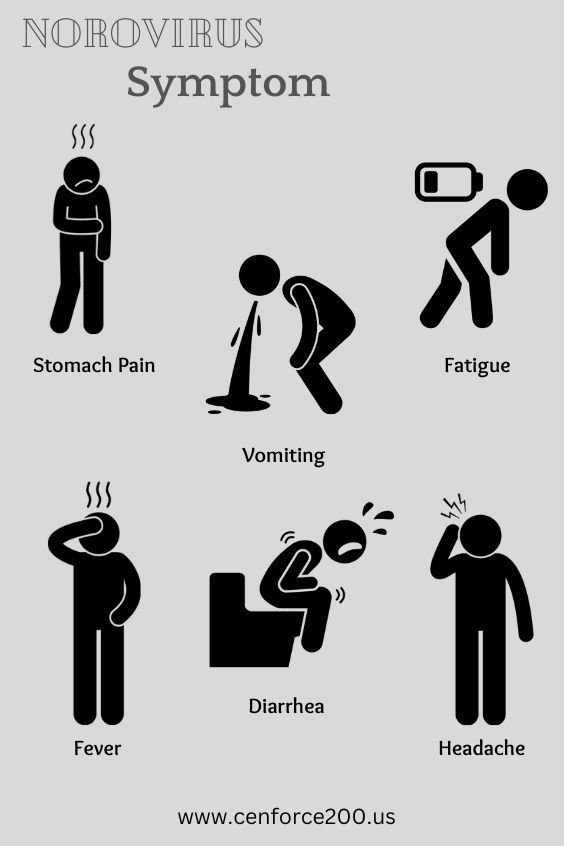
And if that weren’t enough: norovirus has an unusually low infectious dose. Depending on the strain, somewhere between 18 and 1,000 viral particles can cause infection. By comparison, you’d need millions of bacterial cells from some other pathogens to make a person sick. Norovirus operates on a completely different scale. This is part of why outbreaks move so fast in enclosed environments like cruise ships, nursing homes, school cafeterias, and hospital wards. The virus doesn’t need much of a foothold.
Norovirus also survives on hard surfaces for up to two weeks under the right conditions, and it can withstand temperatures up to approximately 145°F (63°C). It is, in short, a structurally stubborn pathogen that can’t simply be evaporated off your hands with a gel.
2. Why Alcohol Sanitizers Fall Short, Specifically
A lot of health content describes this situation as hand sanitizer being “less effective” against norovirus. That framing doesn’t quite capture it.
The CDC is actually direct: hand sanitizer “does not work well against norovirus.” Not moderately less effective, not a reasonable fallback. The guidance is clear, and it’s based on exactly the structural biology described above.
Some research has examined whether very high concentrations of alcohol (above 70%) applied over extended contact times could show any virucidal activity against non-enveloped viruses. Results are inconsistent, and they don’t reflect how people actually use these products. A real-world sanitizer application takes roughly 10 to 15 seconds before the gel has dried. That’s not enough contact time for even the most optimistic studies to demonstrate meaningful protection against norovirus.
The Pharmaceutical Journal summarized the mechanism plainly: alcohol-based sanitizers work by dissolving lipid membranes, meaning that non-enveloped viruses are largely unaffected. A protein capsid gives norovirus real structural resilience against this particular chemical approach.
This is where the confusion creates public health problems. Sanitizer dispensers have been installed in high-traffic locations as a symbol of “infection prevention,” and the instinct to use them is conditioned in most people now. But if norovirus is circulating in your building, that pump by the door is not doing what visitors assume it is. It’s a habit that feels protective without functioning as protection for this specific virus.
If you want to understand how different viruses require different prevention approaches, Daily Health Updates has a useful breakdown of critical warnings for virus protection that covers this kind of nuance across multiple pathogens.
3. Why Soap and Water Actually Works
It’s not complicated chemistry, but it’s smarter than it looks.
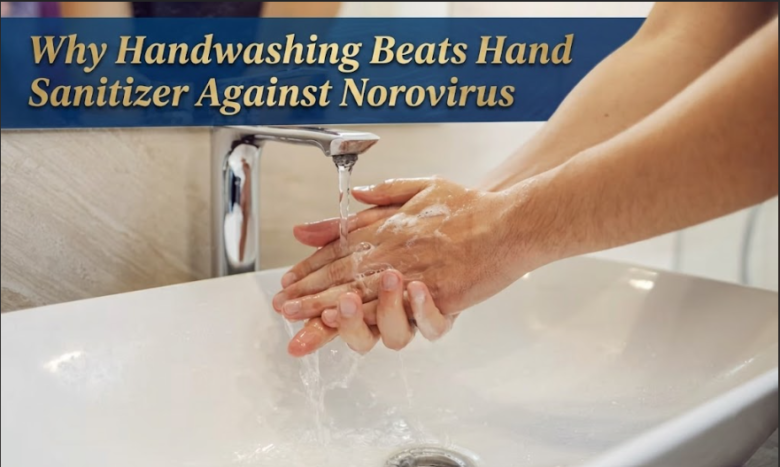
Soap molecules have a dual structure. One end is hydrophilic (water-attracted), and the other is hydrophobic (attracted to oils and fats). When you apply soap to wet skin and rub, the hydrophobic ends of soap molecules attach themselves to the oily surface layer on your hands, including any viral particles or organic material sitting there. The friction of rubbing physically dislodges these particles from the skin’s surface. Then rinsing with running water carries everything away, the soap-viral particle complexes included.
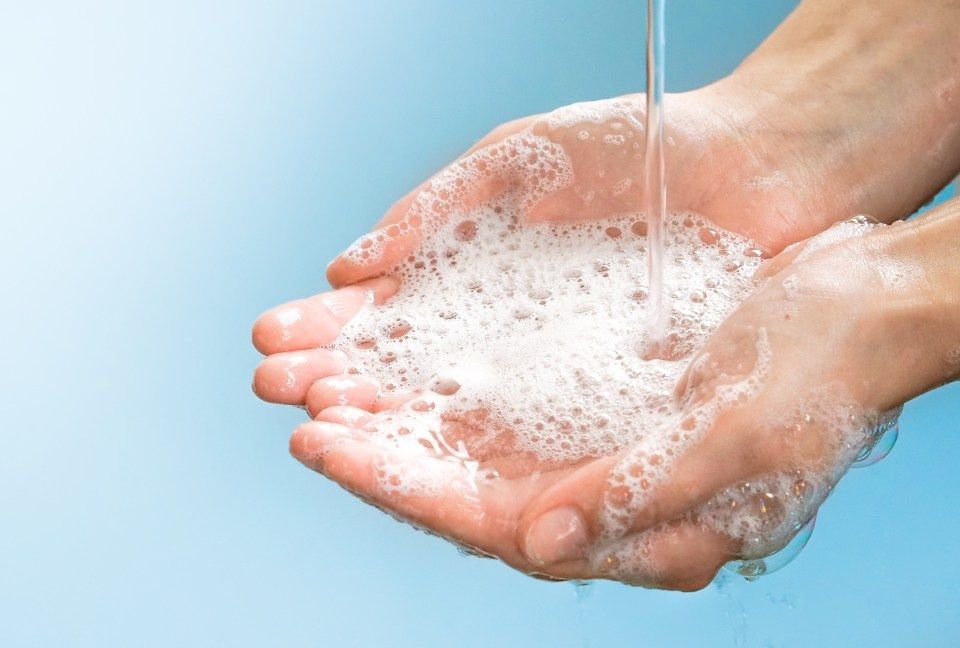
For norovirus, this mechanical removal is what works. You’re not chemically neutralizing the virus. You’re physically stripping it off your hands and sending it down the drain.
Which is why technique matters here, not just the act of washing.
A five-second cold rinse with a quick soap lather is not equivalent to 20 full seconds of active scrubbing with thorough coverage. The 20-second benchmark comes from pathogen removal rate research. Less than 15 seconds shows meaningfully lower particle removal. The surfaces people most commonly skip are between fingers, under nails, thumbs, and wrists, which are exactly the areas that touch surfaces, food, and faces most often.
At Daily Health Updates Org, this comes up frequently in the context of building real prevention habits: the most protective hygiene practices tend to be the least dramatic ones. Consistent, thorough handwashing before eating, after using the bathroom, and after being in shared public environments is one of the highest-return behaviors you can build into your day.
4. A Practical Side-by-Side: Handwashing vs. Hand Sanitizer for Norovirus
Here’s a comparison table to make the differences concrete and easy to reference:
| Factor | Soap and Water | Alcohol Hand Sanitizer (60%+) |
|---|---|---|
| Effective against norovirus? | Yes, via mechanical particle removal | No, or minimally at best |
| How it works | Friction + surfactant physically removes viral particles | Disrupts lipid membranes (norovirus has no lipid membrane) |
| Recommended contact time | At least 20 seconds of active scrubbing | N/A as primary norovirus control method |
| Requires a sink? | Yes | No |
| Best use case | Primary hand hygiene for norovirus | Other pathogens; supplement to handwashing, never a substitute |
| CDC guidance | Preferred method | Not a substitute for handwashing |
For surfaces, the same logic applies. Alcohol-based cleaning sprays, including many sold as “disinfectants,” are not effective against norovirus. The EPA maintains a registered list of disinfectants specifically effective against norovirus (EPA List G), and they are almost exclusively bleach-based. The CDC’s recommended household bleach solution is approximately 3/4 cup of bleach per gallon of water. This is what you need on bathroom surfaces, door handles, faucet handles, and shared contact points when norovirus is circulating.
A note on scale: norovirus is not a rare illness. Roughly 1 in 15 Americans contracts it each year, and globally it accounts for an estimated 685 million cases annually. The CDC estimates 56,000 to 71,000 hospitalizations in the United States each year from norovirus alone, primarily in older adults and young children who are more vulnerable to the dehydration it causes. Taking handwashing seriously for this particular pathogen is not excessive caution, it’s basic, evidence-based prevention.
For anyone looking to build broader prevention habits into daily life, this article on daily wellness routines at Daily Health Updates Org is a good companion read alongside this one.
5. Where People Consistently Go Wrong During an Active Outbreak
Understanding the science is one thing. But an outbreak in your household or community is a stressful situation, and clear thinking about hygiene practice often breaks down in the middle of it.
The most consistent error: people use sanitizer instead of washing, then touch their face, food, or a vulnerable family member while believing they’ve taken proper precautions. This happens not from carelessness but because “use hand sanitizer” has been repeated in so many contexts that it has become the default hygiene response, regardless of what pathogen is actually involved.
But there’s a second common mistake that doesn’t get nearly enough attention: the timing of returning to normal activity after illness.
Norovirus can be shed in stool for two weeks or more after symptoms resolve. A person who feels completely fine on day three may still be infectious. If they’re back in the kitchen cooking for family, or returning to a food service job on day four, this is how household clusters and food service outbreaks happen. The CDC guideline is clear: wait at least 48 hours after all symptoms stop before preparing food or caring for others in higher-risk settings. This is a bright line, not a suggestion.
And a third pattern worth mentioning. Washing hands, but doing it inadequately. A quick rinse without soap, or soap applied and rinsed off in under 10 seconds. Hand hygiene compliance research in clinical settings consistently identifies duration and coverage as the weak points, not intention. People wash, they just don’t wash long enough or cover enough surface area.
The essential recovery steps article on Daily Health Updates addresses many of the practical post-illness hygiene questions that come up during household outbreaks. Worth bookmarking before you need it.
What keeps bringing me back to this topic is how cleanly the evidence cuts against one of the most established public health habits of the last two decades. The hand sanitizer instinct is well-founded for most situations. But norovirus is one of those places where conditioned hygiene behavior diverges sharply from what clinical evidence supports, and the gap matters.
Soap. Water. Twenty seconds. Every surface. That’s what this particular virus actually responds to.
Frequently Asked Questions
Q: How long does norovirus survive on surfaces?
Norovirus can remain viable on hard surfaces for up to two weeks under the right conditions, which is unusually long for a gastrointestinal pathogen. Soft surfaces like fabric or upholstery can also harbor the virus for shorter periods and are harder to properly disinfect. The practical takeaway: any shared contact surface in a home where someone has been sick, bathroom taps, toilet handles, door handles, fridge doors, needs to be cleaned with a bleach-based disinfectant, not a standard multi-purpose spray.
Q: If I don’t have access to a sink, is hand sanitizer completely useless against norovirus?
Not completely, but close. If soap and water aren’t available, a sanitizer with at least 60% alcohol is still better than nothing for other pathogens you may have encountered. But don’t count on it for norovirus specifically. As soon as you reach a sink, wash your hands properly. Think of any sanitizer use as a temporary bridge rather than a solution.
Q: Can you catch norovirus from someone who isn’t showing symptoms?
Yes, and this is part of why it spreads so efficiently. Viral shedding begins before symptoms appear and continues for up to two weeks after a person feels fully recovered. Someone who had the stomach illness last week and seems completely fine may still be contagious, particularly if they’re handling food or skipping careful handwashing after using the bathroom. The pre-symptomatic and post-symptomatic contagion windows are both real and both underappreciated.
Q: Does cooking food kill norovirus?
Not reliably. Norovirus can survive temperatures up to approximately 145°F (63°C), which means lightly cooked or quickly heated foods may not eliminate it. Shellfish, particularly raw or lightly cooked oysters, are a well-documented transmission vehicle because these filter feeders can concentrate viral particles from contaminated water. Thorough cooking at higher internal temperatures is the safer approach when contamination is suspected.
Q: What’s the correct handwashing technique to actually be effective against norovirus?
Duration and coverage both matter. Wet your hands first, apply soap, then scrub actively for a full 20 seconds. Cover palms, backs of hands, between all fingers, thumbs, fingernail areas, and wrists. Rinse thoroughly under running water, and dry with a clean towel. The “Happy Birthday twice” timing method is genuinely practical, even if you feel slightly ridiculous using it. The surfaces people most commonly miss are the nail beds and the web spaces between fingers, so pay deliberate attention to those.