
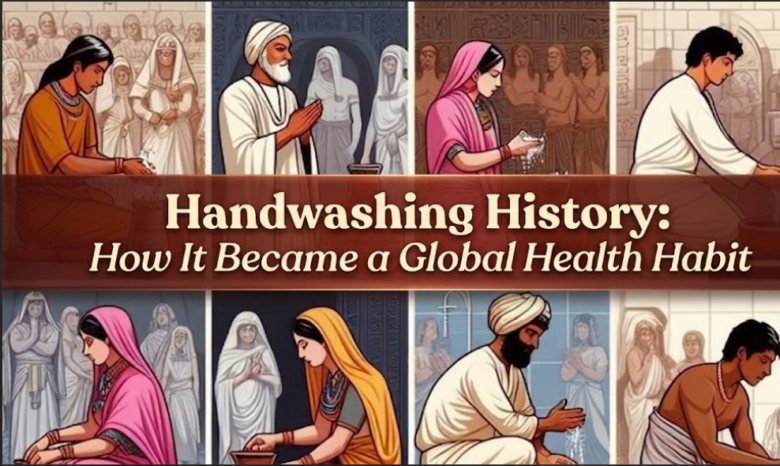
The man who proved handwashing saves lives died in a psychiatric institution at 47. His colleagues thought he was a crank.
That detail always stops me. I spend a lot of time with health research, and I’ve come across plenty of findings that took decades to be taken seriously. But the story of Ignaz Semmelweis sits in a category of its own. This was a physician who had data. Real, observable, numerical data showing that one simple hygiene change cut patient deaths by more than 80%. And the medical establishment of the 1840s looked at it and said: no thanks.
The fact that handwashing is now considered one of the most effective public health interventions we have — that didn’t happen cleanly, or quickly. It took roughly 150 years, a lot of unnecessary deaths, and a global pandemic to fully cement it as a universal habit.
Here’s how it actually happened.
1. The Doctor Who Was Right Before Anyone Was Ready to Hear It
In 1847, a young Hungarian physician named Ignaz Semmelweis was working at the Vienna General Hospital. He noticed something that should have triggered immediate alarm: women giving birth in the ward staffed by medical students and physicians were dying at a rate three to five times higher than women in the ward staffed by midwives.
The official explanation at the time? Miasma. Bad air. General misfortune.
Semmelweis tracked patterns instead of accepting that. The key difference he identified was that doctors and medical students moved directly from performing autopsies to delivering babies, without washing their hands. The midwives were not doing autopsies. He called the death-causing substance “cadaverous particles” — germ theory didn’t exist yet, so he had no precise language for what he was observing — and he introduced mandatory handwashing with a chlorinated lime solution in his ward.
Mortality dropped from roughly 10–18% to under 2%. Within months.
You’d think that result would have traveled fast. It didn’t. His superiors resisted. His colleagues were offended by the implication that their hands were killing patients. He lost his hospital position, returned to Budapest, and spent years trying to persuade a resistant medical community that he was right. He died in 1865 under disputed circumstances in a mental institution. He likely never knew that just two years later, Louis Pasteur’s germ theory would vindicate everything he had argued.
That part of the history matters because it illustrates something I notice echoed in health communication even now: people don’t adopt a behavior just because the data supports it. Ego, professional culture, and existing belief systems all create friction. Semmelweis was telling physicians that their unwashed hands were killing patients. That wasn’t a small ask, and the medical establishment of that era treated it as an attack on their professional identity rather than an invitation to improve outcomes.
2. Germ Theory Arrives, and the Scientific Framework Finally Catches Up
Semmelweis was working in a theoretical vacuum. He had evidence but no mechanism to explain why handwashing worked. That changed with Louis Pasteur and later Robert Koch.
Pasteur’s germ theory, developed through the 1860s, established that specific microorganisms cause specific diseases. Koch followed in the 1880s with his postulates that systematically proved links between bacteria and diseases including tuberculosis and cholera. For the first time, there was a coherent scientific explanation for what Semmelweis had observed and demonstrated decades earlier.
Joseph Lister took Pasteur’s findings into surgical practice in 1867, introducing antiseptic techniques to operating rooms. The underlying logic was the same: microorganisms on surfaces and hands cause infections, and disrupting that transfer saves lives.
Around this same period, Florence Nightingale was making a parallel case for cleanliness in patient care, grounding it in meticulous data she collected from the Crimean War. Her framework wasn’t built around germ theory specifically, but the practical conclusion was identical: improved sanitation and hand hygiene dramatically reduced infection-related deaths.
None of this instantly changed public behavior. And that gap between scientific consensus and everyday habit is, honestly, the most interesting and underappreciated part of this whole story.
But it laid the foundation. By the late 19th century, the medical community had broadly accepted germ theory, and with it came growing recognition that hand-to-hand transmission was a primary route for infectious disease. The next problem was getting that understanding out of medical journals and into daily life.
3. From Medical Consensus to Public Health Policy — The Slow Middle
Here’s where most people assume the story speeds up. Germ theory accepted, handwashing message spreads, done. But the translation from “medical consensus” to “widespread daily habit” was uneven, slow, and genuinely difficult in ways that are still relevant now.
Through the early to mid 20th century, handwashing recommendations were mostly tied to specific outbreaks: cholera, typhoid, influenza. Cleanliness was promoted during epidemics and linked, increasingly, to social status and domesticity in mass advertising. But consistent daily handwashing as a normalized routine wasn’t yet established for most households.
Here’s a condensed look at how the modern standard developed:
Handwashing: A Condensed History
| Period | Development |
|---|---|
| 1847 | Semmelweis introduces chlorinated lime handwashing; mortality drops from ~18% to under 2% |
| 1860s | Pasteur’s germ theory provides the biological explanation |
| 1867 | Lister introduces antiseptic surgery, applying the same logic to operating rooms |
| 1880s | Koch isolates cholera and tuberculosis bacteria; transmission routes clarified |
| 1900s–1940s | Soap becomes widely commercially available; cleanliness increasingly marketed to households |
| 1980 | CDC publishes the first formal U.S. handwashing guidelines |
| 1988 | First studies specifically on handwashing’s role in preventing foodborne illness published |
| 2005 | WHO launches multimodal hand hygiene strategy for healthcare settings |
| 2008 | Global Handwashing Day established (October 15 each year) |
| 2020 | COVID-19 pandemic drives unprecedented global handwashing campaigns |
One thing worth sitting with in that timeline: it wasn’t until 1980 that the CDC issued evidence-based handwashing guidelines. That’s 133 years after Semmelweis. Public health infrastructure, microbiological knowledge, and communication systems were all necessary components, but the gap is still remarkable.
The WHO’s multimodal strategy, formally launched in 2005, tackled not just the “why” of hand hygiene but the very practical barriers to consistent compliance. What the research found was that reminder signage and placing alcohol-based rub within arm’s reach actually worked better than information-only campaigns. People weren’t skipping handwashing because they didn’t understand the evidence, they were skipping it because the behavior was inconvenient in the moment.
That finding shows up in Daily Health Updates’ virus prevention coverage: it’s the environmental design, not just the knowledge, that drives consistent behavior.
4. Where People Usually Get It Wrong: Technique Matters More Than Anyone Admits
Most people think they know how to wash their hands.
Most people are not entirely right about that, and this is the piece of the history that tends to get skipped over.
We spent 150 years fighting to establish handwashing as a norm. The research on how to do it effectively is more recent, and far less well-known. A 2020 review in the American Journal of Infection Control found that a significant proportion of adults in observational studies either skipped handwashing in recommended situations or performed abbreviated versions that left high-risk areas, including between fingers, under fingernails, and the backs of hands, inadequately cleaned.
The recommended duration is at least 20 seconds with soap. The actual observed average in multiple studies? Around 6 seconds.
What the evidence actually supports:
Soap doesn’t kill most pathogens in the technical sense. What it does is loosen pathogens from the skin surface through mechanical action and friction, so they can be rinsed away. Plain water alone is not equivalent to washing with soap, and “a quick rinse” is not a hand wash.
There’s also the drying step, which most people ignore completely. Wet hands transfer pathogens more readily than dry hands. This isn’t a fine print detail.
And the “when” matters as much as the “how.” The WHO’s “5 Moments for Hand Hygiene” framework outlines critical moments in clinical care. For everyday routines, the highest-risk moments are: before preparing or eating food, after using the toilet, after coughing or blowing your nose, after caring for a sick person, and after touching high-contact surfaces in public spaces.
If you’re looking at daily health wellness routines that actually reduce infection risk, hand hygiene done correctly is one of the highest-return habits available. The data on that is consistent across decades of research.
5. COVID-19 and the Behavior Surge That Didn’t Fully Stick
The 2020 pandemic functioned as a real-world experiment in mass behavior change. Almost overnight, handwashing moved from a background public health recommendation to a constant, globally reinforced behavior. Sanitizer dispensers appeared at every entrance. Government communications repeated “wash your hands” in multiple languages across every platform. Twenty-second timers went viral.
Did it work? Partly. Surveys from 2020 and 2021 consistently showed significant increases in self-reported handwashing frequency across most regions. In some lower-income countries, where access to soap and clean water had been a persistent structural barrier, international attention also drove infrastructure improvements that had real population-level impact.
But the gains weren’t uniform, and some of them didn’t hold. Research on hand hygiene compliance after the peak of pandemic urgency showed a gradual decline back toward pre-pandemic baselines in many settings. Public health researchers called it “hygiene fatigue” — the phenomenon where behaviors adopted under acute threat fade as the immediate risk recedes, even when the underlying logic for the habit remains sound.
That pattern, by the way, is part of why ongoing health education resources like Daily Health Updates exist. Evidence-based practices don’t maintain themselves on public awareness alone. They need consistent reinforcement, accessible explanations, and context that connects general recommendations to daily life.
The pandemic also clarified something research had been pointing to for years: handwashing works best as part of a layered approach to infection prevention, not as a standalone intervention. Respiratory hygiene, ventilation, surface cleaning, and vaccination all contribute. Handwashing matters enormously, but it matters most when it’s combined with other protective behaviors, and when it’s actually done correctly.
For a fuller picture of how these behaviors combine, the virus prevention resources at Daily Health Updates cover the current evidence across multiple infection-control areas.
Frequently Asked Questions
Q: When did soap become widely used for everyday handwashing?
Commercial soap production scaled significantly in the 19th century, but soap-like substances have existed since ancient Babylonian records around 2800 BCE. What changed in the 1800s and early 1900s was access: affordable soap became available for ordinary households at the same time germ theory education was beginning to spread. The combination of commercial availability and scientific framing is what drove adoption. The marketing of soap as a cleanliness and social-status product in the early 20th century also played a larger role than most public health histories acknowledge.
Q: Is hand sanitizer as effective as soap and water?
For the majority of common pathogens, alcohol-based hand sanitizers with at least 60% alcohol are comparable to soap and water. The important exceptions are norovirus, Clostridioides difficile (C. diff), and Cryptosporidium, which are not reliably inactivated by alcohol. For these pathogens, soap and water is the recommended approach. Sanitizer is a good option when handwashing facilities are unavailable, not a permanent substitute for washing with soap.
Q: Does water temperature matter for effective handwashing?
No. The evidence does not support that hot water is more effective than cold water for removing pathogens. What matters is soap, friction, duration, and thorough rinsing. Hot water does increase skin irritation with frequent washing, which can actually compromise the skin’s barrier function over time and paradoxically increase susceptibility to infection.
Q: How did Global Handwashing Day get started?
Global Handwashing Day was established in 2008 through a collaborative effort involving UNICEF, the World Bank, and various public health organizations. It’s observed every October 15. The initiative was partly a response to data showing that even in contexts where handwashing knowledge was high, consistent practice, especially among children, remained low. The specific focus on children reflected research showing that handwashing education in schools produced measurable reductions in diarrheal and respiratory illness.
Q: Why do healthcare workers, who know all the evidence, still skip handwashing?
This is one of the genuinely underexplored questions in compliance research. Knowing that a behavior is beneficial does not reliably produce that behavior — a gap that shows up consistently across health and behavioral science. Studies on hand hygiene compliance among healthcare workers, who have access to all the evidence and constant reminders, still find compliance rates well below 100%. Contributing factors include time pressure, skin irritation from frequent washing, habit disruption during high-stress tasks, and what researchers call the “invincibility bias” — a general tendency to underestimate one’s own personal risk. This is exactly why structural interventions (placing soap dispensers at the point of care, making alcohol-based rub immediately accessible) outperform information campaigns. The easier the behavior is to perform, the more consistently it gets performed.
The story of handwashing is, at its core, a story about the distance between knowing something and doing something. Semmelweis had the data in 1847. The global public health community spent the next 173 years building the infrastructure, the education systems, and the behavioral scaffolding to make acting on that data routine. And we’re still working on the habit part, which means this history isn’t finished.