
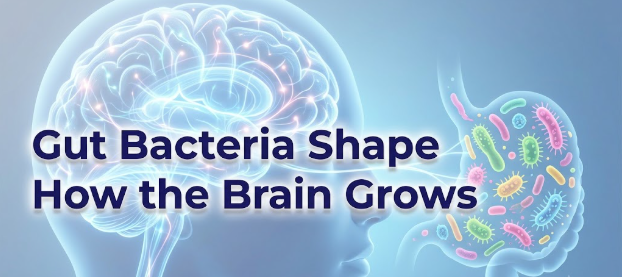
Something I keep coming back to, after years of reading health research, is how often the gut turns up somewhere unexpected. I was working through a paper on early childhood neurodevelopment not long ago, expecting the usual focus on genetics, prenatal nutrition, and environmental stimulation. And then there it was: a full section describing how bacteria living in an infant’s intestinal tract actively influence the way the brain builds itself. Myelination. Microglia maturation. Neurotransmitter pathways. All of it, shaped in part by what’s happening in the gut.
I re-read that section twice.
The widely held assumption about brain development puts genetics at the center, with nutrition, sleep, and early experiences filling in around the edges. That story isn’t wrong. But it’s incomplete. A growing body of research is showing that the microbes living in the gut during early life are participating in brain development in ways that go well beyond what most people picture when they think about gut health.
And the research is specific enough now that the question isn’t really “does this connection exist?” It’s “how deep does it go?”
1. What the Gut-Brain Axis Actually Is
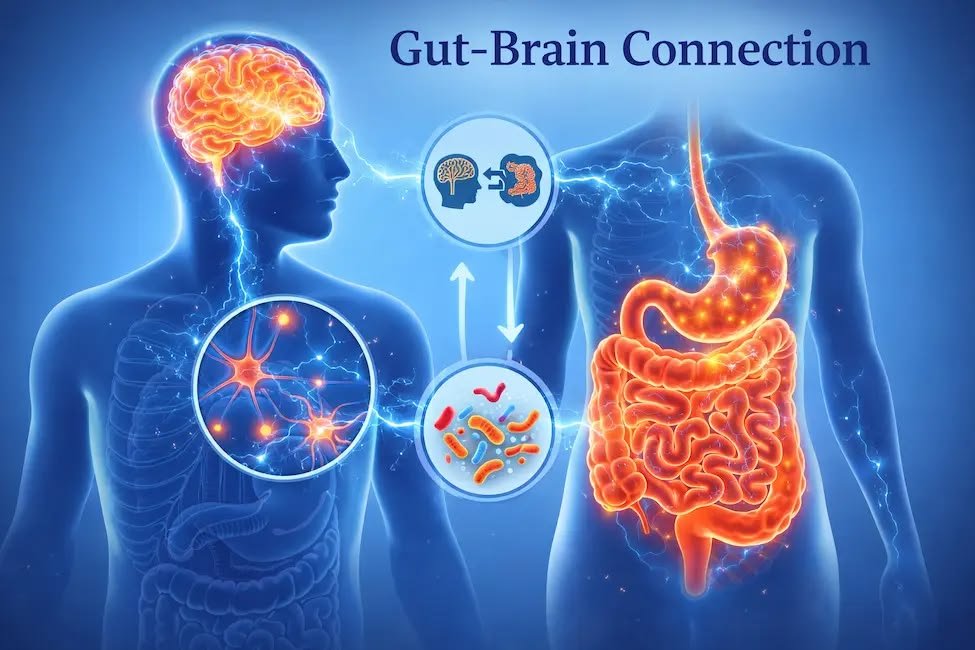
The term “gut-brain axis” gets used a lot now, but it refers to something genuinely well-documented: a two-way communication system between the intestinal tract and the central nervous system, operating through multiple, identifiable pathways.
The vagus nerve is the most direct of these. It’s a long branching nerve that runs from the brainstem down through the chest and into the abdomen, connecting to most major organs on the way. What most people don’t realize is that roughly 80-90% of the fibers in the vagus nerve are afferent, meaning they carry signals upward, from the gut to the brain, not the other way around. The brain is listening to the gut far more than it’s talking to it.
But the vagus nerve is just one piece.
Gut bacteria produce a class of compounds called short-chain fatty acids (SCFAs), primarily butyrate, propionate, and acetate. These form when bacteria ferment dietary fiber. SCFAs can cross the blood-brain barrier and appear to influence neuroinflammation, gene expression in brain tissue, and the behavior of the brain’s own immune cells. Then there’s serotonin: roughly 90-95% of the body’s serotonin is produced in the gut, not the brain, and the gut microbiome plays a direct role in regulating that production.
So when researchers describe gut bacteria “shaping” brain development, they’re not speaking loosely. There are measurable biochemical mechanisms behind it. Not metaphors.
2. The Developmental Window That Doesn’t Get Enough Attention
Brain development doesn’t happen at a steady, even pace across a lifetime. There are critical windows, periods when the brain is particularly sensitive to environmental input and when the neural circuitry governing mood, cognition, and behavior is being laid down rapidly.
Some of the most significant of these windows fall in the first two to three years of life. And during the prenatal period.
That’s also exactly when the gut microbiome is being established for the first time.
A newborn’s gut is largely sterile at birth. In the hours and days that follow delivery, it begins to be colonized by bacteria from the birth environment, the mother’s body, breast milk, and the surrounding air. This early colonization is shaped by birth mode, feeding method, antibiotic exposure, and the environment the baby spends time in, and it varies considerably from infant to infant.
Here’s what research has found: those early differences in microbiome composition correspond to measurable differences in brain development.
Animal studies have been particularly revealing. Mice raised in completely sterile environments, with no gut bacteria at all, show altered myelination patterns, changes in microglia density and maturation, and disrupted production of neurotrophic factors. When researchers reintroduce specific bacterial strains to these germ-free animals, some of those changes reverse. That’s not a minor finding. It suggests the microbiome isn’t passively observing brain development from a distance. It’s involved.
If this raises questions about children who’ve had multiple early courses of antibiotics or who weren’t breastfed, that’s a reasonable line of thinking. The research doesn’t offer clean clinical answers yet, the mechanism is there in animal models but human studies are still catching up. Either way, it does suggest early gut disruptions matter in ways that extend beyond digestion. The team at Daily Health Updates has covered some of this in detail, including what it takes to rebuild gut health after repeated illness, which connects to some of these early-life questions.
3. Two Brain Processes That Gut Bacteria Directly Influence
Most conversations about brain development naturally focus on neurons and synapses. But two other processes appear to be particularly sensitive to what’s happening in the gut: myelination and microglia development.
Myelin is the fatty insulating sheath that wraps around nerve fibers. It’s what allows electrical signals to travel quickly and reliably. Without adequate myelination, signals are slower and less precise. SCFAs produced by gut bacteria, particularly butyrate, appear to influence the cells responsible for producing myelin (called oligodendrocytes). Studies in germ-free animals show myelination deficits that improve when certain bacterial strains are reintroduced. The exact translation to human outcomes is still being worked out, the mechanism itself is established.
Microglia are the brain’s immune cells. They’re involved in clearing cellular debris, pruning synaptic connections that aren’t being used, and responding to infection or injury in the brain. Their maturation appears to be regulated, at least partly, by signals from gut bacteria. Germ-free animals have immature, poorly functional microglia. Reintroduce the microbiome, and microglial maturation normalizes. This matters because dysfunctional microglia have been implicated in conditions ranging from anxiety and depression to certain neurodevelopmental disorders.
And then there’s brain-derived neurotrophic factor (BDNF), which supports the survival and growth of existing neurons and plays a central role in learning and memory. Germ-free animals consistently show lower hippocampal BDNF levels than animals with normal gut colonization. The hippocampus is the region most associated with forming new memories.
So: myelination, immune function in the brain, and memory consolidation, all showing sensitivity to what’s living in the gut. That’s a significant cluster of processes to be influenced by intestinal bacteria.
Quick Reference: How Gut Bacteria Influence Brain Development
| What the Microbiome Does | What Gets Affected |
|---|---|
| Produces SCFAs (butyrate, propionate, acetate) | Myelination; neuroinflammation control; gene expression in brain tissue |
| Regulates serotonin production | Mood signaling; gut-to-brain communication via vagus nerve |
| Supports microglia maturation | Synaptic pruning; immune response in the brain; debris clearance |
| Influences BDNF levels | Neuron survival; memory formation; hippocampal function |
| Modulates GABA pathways | Anxiety regulation; stress response management |
| Drives vagus nerve signaling | Autonomic nervous system tone; relaxation and stress cues |
These are not definitive certainties across every human population. They’re well-supported mechanisms and associations from animal models and emerging human research. The picture is still being assembled. But the consistency across studies and across very different research designs makes dismissing this connection difficult to justify.
4. Where the Common Assumption Breaks Down
The assumption that takes the biggest hit from this research is the one that treats gut health as a digestion story and brain development as a separate, mostly genetic one.
To be precise about this, because I think it’s easy to overcorrect: the gut microbiome is not the primary driver of brain development. Genetics, prenatal nutrition, sleep quality, stress, and early stimulation all matter enormously, arguably more. What the microbiome research adds is a layer that wasn’t previously accounted for, one that operates through specific mechanisms during critical developmental windows.
At Daily Health Updates, this gut-immunity relationship has come up in other contexts before. The research on brain development adds another dimension to that same picture. If you want to see how gut bacteria influence immune function more broadly, this piece on gut health versus immunity supplements covers some of that ground well.
Now, here is where people tend to make the wrong turn. A lot of the interest in this topic gets funneled toward probiotics, as though taking a capsule of Lactobacillus acidophilus addresses the same thing that establishing a diverse early-life microbiome does. Those are categorically different interventions, and it’s worth being clear about that. The early-life window involves colonization, a foundational process. An adult probiotic supplement is doing something far more modest. For some people with specific gut disruptions, certain strains show interesting effects on mood and cognition in research, but the results don’t generalize across all strains, all people, or all contexts. If you’ve seen conflicting claims in this space, this breakdown of probiotic myths and facts is worth reading before drawing conclusions.
And gut-brain health doesn’t operate separately from inflammation, either. Gut dysbiosis is one of the better-documented drivers of systemic inflammatory signaling, including in the brain. Chronic inflammation has increasingly clear effects on neurological function, and the gut microbiome is deeply involved in whether that inflammatory state gets switched on or kept in check.
5. What This Means If You’re Not an Infant
A fair question at this point is: if the most sensitive developmental windows are in early childhood, does any of this matter once you’re past them?
Yes. But differently.
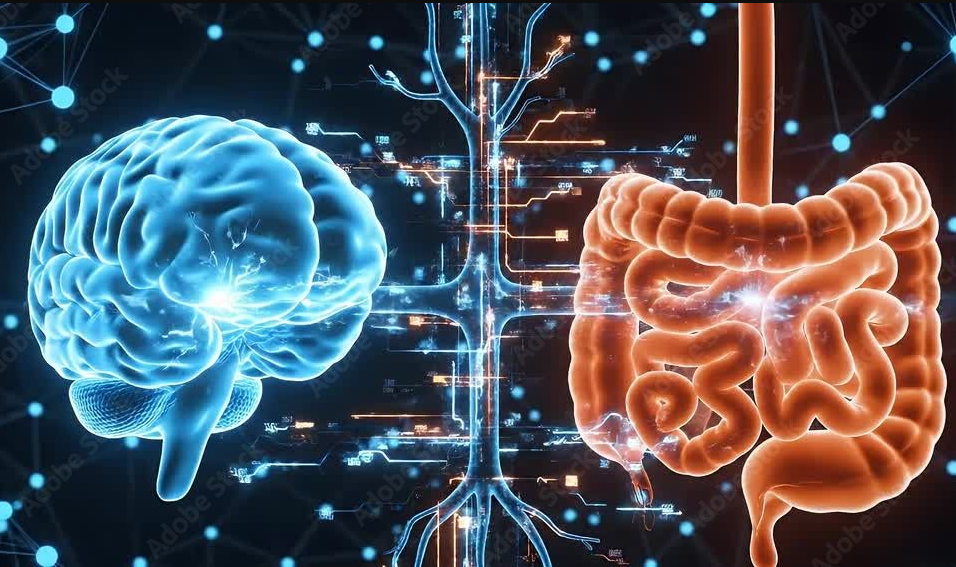
The gut-brain axis doesn’t go dormant after age three. It’s active across the entire lifespan, and the adult brain continues to respond to microbiome signals. What changes is the nature of the influence. During early development, the microbiome is helping construct the architecture. In adulthood, it’s operating more in a maintenance role, modulating inflammation, supporting cognitive function, and influencing mood and stress responses.
Post-illness brain fog is one place where the gut-brain connection shows up practically for adults. There’s emerging evidence that gut dysbiosis following viral illness contributes to some of the neurological symptoms people experience during recovery. The Daily Health Updates article on post-illness brain fog addresses some of those mechanisms, and they connect to the same signaling pathways discussed here.
For everyday adult health, this doesn’t call for a complete lifestyle overhaul based on a single emerging research area. It does provide a biologically grounded reason to take gut microbiome diversity seriously, not just for digestive comfort. Dietary fiber intake, fermented foods where they’re tolerated, reduced ultra-processed food consumption, consistent sleep, and reasonable stress management all support a diverse microbiome. And through those microbial signals, they support the brain, too.
Not in a dramatic, one-to-one way. But through the accumulated effect of what you’re sending those organisms over time.
Frequently Asked Questions
Does what I eat actually affect my brain through gut bacteria?
Yes, through several mechanisms that are reasonably well-supported by research. Gut bacteria produce short-chain fatty acids, regulate serotonin production, influence inflammatory signaling throughout the body, and send information through the vagus nerve. All of those processes have downstream effects on brain function. A diet higher in fiber and lower in ultra-processed food generally supports microbiome diversity, which supports this communication. The relationship isn’t immediate or dramatic, but it’s real and it accumulates over time.
Are babies born by C-section at a disadvantage for brain development?
This is nuanced, and worth being careful about. C-section babies have different early microbiome compositions than vaginally-delivered babies because they don’t pass through the birth canal. Some studies have linked this to modest differences in certain neurodevelopmental measures. But the microbiome continues developing for years after birth, and early breastfeeding, skin-to-skin contact, time spent outdoors, and avoiding unnecessary antibiotics all help diversify the microbiome during that period. It’s not a fixed outcome. Many factors shape the trajectory.
What exactly does the gut microbiome produce that reaches the brain?
Several things. Short-chain fatty acids, particularly butyrate, cross the blood-brain barrier and influence myelination, neuroinflammation, and gene expression in brain tissue. Gut bacteria regulate serotonin production, with approximately 90-95% of the body’s total serotonin originating in the gut. They also influence BDNF levels (key for memory and neuron survival), GABA pathway activity (important for anxiety regulation), and the nature of vagus nerve signaling between gut and brain.
Should I give my child probiotics to support their brain development?
Research on probiotics specifically for neurodevelopment in children is still early and limited. Certain strains have shown some effects in specific pediatric populations in clinical trials, but the evidence isn’t strong enough yet to make a general recommendation. Supporting dietary diversity and fiber intake (which feeds existing gut bacteria) remains the most broadly supported approach for most children. If you’re concerned about a specific situation, a pediatric dietitian or physician is the right person to consult.
At what age does the gut microbiome have the most influence on brain development?
The first two to three years of life are considered the most sensitive window, overlapping with the period of most rapid brain development. The prenatal period also matters, because the mother’s own gut microbiome during pregnancy appears to influence the early microbial colonization of the infant. Interventions later in life aren’t without value. But those early years represent a particularly consequential window when the gut and brain are both still building themselves, often in conversation with each other.
The brain was never building itself in complete isolation from the rest of the body. That much is becoming clearer with each study that maps these microbial connections. What’s still being worked out is how far those connections extend in humans specifically, and which interventions actually move the needle. But the question of whether gut bacteria play a role in brain development has been answered. It’s the how and the how much that research is focused on now.