

A 2020 analysis published in Nature Medicine tracked close contacts of COVID-19 patients and concluded that approximately 44 percent of secondary transmission happened before the infected person showed any symptoms at all.
That number changed a lot of assumptions.
For a long time, infection control guidance operated on a workable but incomplete logic: if you felt well, you were low risk. Isolate the sick, protect the healthy, and transmission slows. That framework held for some viruses. For COVID-19 it didn’t, and the biological reasons behind that failure aren’t unique to SARS-CoV-2. Several common respiratory viruses follow the same basic pattern. Understanding how pre-symptomatic transmission works means understanding two things that often get described interchangeably but are not the same: the incubation period and viral shedding.
1. How a Virus Becomes Contagious Before You Feel Anything
When you’re exposed to a respiratory virus, replication doesn’t begin throughout the body at once. It starts in a narrow region, typically the upper respiratory tract, the nasal passages, the back of the throat, and for some viruses the lower airways. The virus attaches to specific receptor proteins on the surface of host cells, enters those cells, and uses their molecular machinery to produce copies of itself.
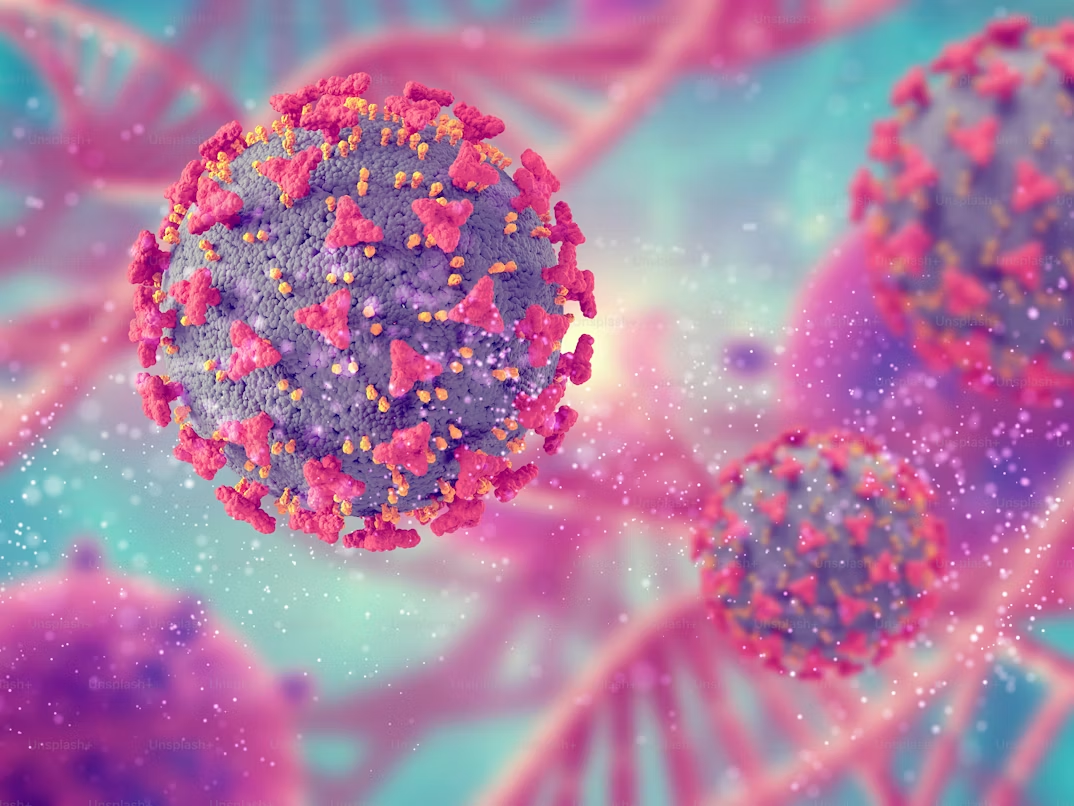
The incubation period is the span of time between that initial infection and the appearance of symptoms. During incubation, the immune system has registered the intrusion and is mounting a response, but it hasn’t yet generated the full inflammatory cascade that produces fever, congestion, fatigue, or sore throat. Those symptoms are largely your immune system’s work, not direct damage from the virus. The pathogen itself can be present, replicating, and increasing in concentration in your secretions before your body produces any noticeable signal that something is wrong.
This is the pre-symptomatic window. Viral shedding, the release of replicating virus particles into the respiratory secretions that can be passed to others, begins during that incubation phase, not at the point when symptoms appear. Whether the amount of virus in those secretions is high enough to establish infection in a close contact depends on the specific virus, the individual’s immune response, and the transmission route.
Symptoms are largely caused by your immune response. The virus precedes them.
2. How the Pre-Symptomatic Window Compares Across Common Viruses
The length and timing of pre-symptomatic shedding is not uniform. Each respiratory virus has its own incubation period profile and its own shedding kinetics. The practical differences matter.
Below is a plain-text reference chart based on published epidemiological and virological data:
PRE-SYMPTOMATIC TRANSMISSION: APPROXIMATE TIMELINE BY VIRUS

Virus              | Avg. Incubation   | Pre-Sympt. Window | Notes
-------------------|-------------------|-------------------|-----------------------------------------
COVID-19           | ~5 days (2–14d)   | 1–3 days before   | Viral load peaks near or just before symptom onset
Influenza          | 1–4 days          | ~24 hours before  | Most contagious first 3–4 days of illness
Norovirus          | 12–48 hours       | 12–24 hours       | Fecal-oral route; high shedding in short window
RSV                | 2–8 days          | 1–2 days before   | Significant in young children and elderly
Rhinovirus (cold)  | 1–3 days          | Minimal; peaks at | Shorter pre-sympt. window than COVID or flu
                   |                   | or just before    |
For COVID-19, the data showed that upper respiratory viral load peaked around the time of symptom onset or within one to two days prior. This is why early guidance that focused on isolating symptomatic individuals missed a substantial share of transmission chains. The window is short in absolute terms, but even 24 to 48 hours of unknowing infectivity in a shared office, classroom, or household generates real exposure.
Influenza’s pre-symptomatic window is compressed because the incubation period itself is shorter. One day of unknowing infectivity sounds modest until you account for how many people a commuter or a school-age child comes into contact with during a single Tuesday.
For RSV, the pre-symptomatic period is particularly consequential in pediatric settings. Infants and young children shed RSV for longer and at higher levels than adults, and their symptoms are often subtle or atypical, which means they can remain in daycare or family gatherings while infectious. This is a pattern that Daily Health Updates Org outlines in their critical virus warnings coverage.
3. What Viral Shedding Actually Is and Why It Starts Early
The phrase “viral shedding” appears frequently in outbreak reporting but is rarely explained at the biological level.
When a virus successfully infects a host cell, it redirects that cell’s machinery to produce thousands of viral copies. Those copies exit the cell, sometimes by budding from the cell membrane and sometimes by rupturing it, and a portion of them end up suspended in mucosal secretions: nasal fluid, saliva, the mucus lining the bronchi and trachea. From there, transmission occurs through respiratory droplets released when a person speaks, coughs, breathes, or sneezes; through fine aerosol particles that can remain suspended in poorly ventilated air; and in some cases through fomite transmission, surfaces contaminated with infectious secretions.
The critical question isn’t whether shedding begins pre-symptomatically. It does, in the viruses listed above. The question is whether the viral load in those early secretions is high enough to establish infection in a contact. On this point, the COVID-19 data was particularly instructive: nasal swab samples from pre-symptomatic COVID-19 patients showed viral concentrations comparable to those from actively symptomatic patients in multiple studies. The range across individuals was wide, but the overlap was real and documented.
Influenza follows a broadly similar arc at a smaller scale, shedding begins around 24 hours before symptoms appear, peaks in the first two to three symptomatic days, and then declines. Norovirus sheds heavily in stool and can begin pre-symptomatic fecal shedding 12 to 24 hours before gastrointestinal symptoms develop, which is partly why outbreaks in closed settings like cruise ships and care homes move so quickly.
4. Pre-Symptomatic vs. Asymptomatic: An Important Distinction
These two terms are used interchangeably in a lot of popular health coverage. They describe different situations.
Pre-symptomatic refers to someone who is infected and will eventually develop symptoms, but hasn’t yet. They are in the incubation window, shedding virus, and will feel sick within days.
Asymptomatic refers to someone who is infected, carries and sheds the virus, but never develops noticeable symptoms at any point in their infection.
For COVID-19, estimates for truly asymptomatic infection ranged from roughly 20 to 40 percent of infected individuals, depending on the study population, the variant, and how rigorously “asymptomatic” was defined (some studies included mild symptoms that participants didn’t attribute to illness). Asymptomatic individuals do shed virus, though several studies found their peak viral loads were somewhat lower on average than symptomatic cases. The picture varies enough that no universal statement holds for all circumstances.

The practical significance of this distinction is that any isolation policy based entirely on symptom presence misses two populations: people who are pre-symptomatic and will develop illness in the coming days, and people who are asymptomatic and never will. Both can transmit. This is the epidemiological basis for the broader public health tools that were deployed during COVID-19: widespread testing, contact tracing, ventilation improvements, and masking guidelines that applied regardless of symptom status.
This also explains why “I feel fine” has never been a complete answer to exposure risk for highly transmissible respiratory viruses. It’s a relevant data point. It’s not a definitive one. Daily Health Updates Org has covered the practical safety considerations around emerging viruses in ways that make this broader context easier to apply to real decisions.
And here’s where this genuinely gets complicated for daily life, worth pausing on. Most people cannot and should not preemptively isolate following every possible exposure. The biology of pre-symptomatic transmission is real, but risk is contextual. The same exposure carries a very different risk profile depending on whether it was a brief outdoor conversation or four hours in a poorly ventilated space with someone two days before their fever appeared. Context matters.
5. What Testing Actually Catches in the Pre-Symptomatic Period
The timing of pre-symptomatic transmission has specific implications for testing strategy, and this is an area where a lot of people are working with incomplete information.
PCR tests (polymerase chain reaction) detect viral genetic material at very low concentrations. Because of their sensitivity, they can identify COVID-19 infection during the pre-symptomatic phase, often before viral load has climbed high enough to be detected by other means. A PCR test three to four days after a known exposure, in someone still feeling well, can return a positive result. This is the right tool when early detection matters, before visiting an elderly parent, before a medical procedure, or before attending a high-density event with immunocompromised individuals in attendance.
Rapid antigen tests work differently. They detect viral surface proteins above a concentration threshold, and that threshold is calibrated to the mid-to-peak viral load range, which typically corresponds to the period around symptom onset and the first few symptomatic days. Early in the pre-symptomatic window, before viral load has risen sufficiently, a rapid antigen test may return a negative result even in someone who is already shedding. A negative rapid test in the first 24 to 48 hours after known exposure is not a reliable indicator of non-infectivity. Testing again 24 to 48 hours later significantly improves accuracy.
The practical takeaway: PCR for high-stakes early detection, rapid antigen for confirming active infection during the symptomatic window, and serial rapid testing (two tests 24-48 hours apart) for the pre-symptomatic period when PCR isn’t accessible.
Ventilation improvements, hand hygiene, and surface disinfection address the transmission pathways that remain active before any symptoms develop. These basics apply regardless of testing. The recovery and protection guidance on Daily Health Updates Org addresses what to do once illness has arrived, and a lot of those same practices reduce transmission risk before symptoms appear.
The window of unknowing infectivity is real, but it’s finite. Most respiratory viruses trigger symptoms within a week of exposure. Targeted caution in that window, when you know you’ve been exposed, is where protective measures have the highest return.
Building these habits into a consistent routine, rather than adopting them reactively when illness is already circulating, is covered well in Daily Health Updates Org’s evidence-based daily wellness guidance.
Frequently Asked Questions
How long before symptom onset am I actually contagious? For influenza, the pre-symptomatic infectious window is approximately 24 hours before symptom onset. For COVID-19, the documented window is one to three days, with viral load peaking closest to symptom onset rather than at the beginning of incubation. Norovirus can begin fecal shedding 12 to 24 hours before gastrointestinal symptoms appear. These are population-level estimates and individual shedding patterns vary.
Does a negative rapid antigen test confirm I’m not contagious? Not in the early pre-symptomatic window. Rapid antigen tests detect viral proteins above a threshold that corresponds roughly to mid-level viral loads. In the 24 to 48 hours immediately following exposure, viral concentration may not yet have reached detectable levels even if the person is already shedding. A negative rapid test during this early window should not be treated as confirmation of non-infectivity when visiting vulnerable individuals. PCR testing or serial rapid testing improves detection accuracy.
Is pre-symptomatic transmission actually responsible for most spread? This varies significantly by virus. For COVID-19, the Nature Medicine analysis estimated approximately 44 percent of transmission was pre-symptomatic. For influenza, pre-symptomatic spread accounts for roughly 20 to 30 percent of transmission events, with the majority occurring during the first symptomatic days. For norovirus, transmission peaks during active gastrointestinal illness due to the fecal-oral route, though pre-symptomatic shedding does occur. There is no universal answer across all viruses.
Should I reduce contact after a known exposure if I feel completely fine? If the exposure involved close, prolonged indoor contact with a confirmed case of a highly transmissible illness, and you will be in proximity to elderly or immunocompromised individuals in the coming days, reducing contact and monitoring for symptoms is biologically sound. Testing a few days post-exposure improves detection odds compared to testing immediately. Formal quarantine guidance from public health authorities should take precedence over general principles when specific pathogens are involved.
Are children more likely to spread viruses without symptoms? Children tend to have milder or atypical presentations for several common respiratory viruses, including COVID-19, influenza, and RSV. For RSV specifically, children are the primary reservoir for household and community spread precisely because pediatric infections frequently produce minimal or absent symptoms while viral shedding remains high. This pattern is well-documented and is part of why RSV guidelines focus on protecting infants and the elderly even when the apparent source of exposure is a mildly symptomatic or apparently well child.