People load up on supplements the moment a virus starts circulating and forget to wash their hands properly. Every single time.
That’s not a dig. It’s a pattern I’ve seen across years of working with health professionals and the clients they serve, and it points to a real problem with how most of us think about home virus prevention. We reach for the impressive-sounding intervention and skip the boring one. The boring one usually does more.
Getting viruses out of your home, or at least reducing how well they spread through it, comes down to a sequence of practical habits applied in the right places. Not a wellness routine. Not a supplement stack. Just a handful of things done consistently, in an order that matches where transmission actually happens.
1. Fix Your Handwashing Before You Do Anything Else
This is the highest-return habit in the list, and also the one most often done wrong.
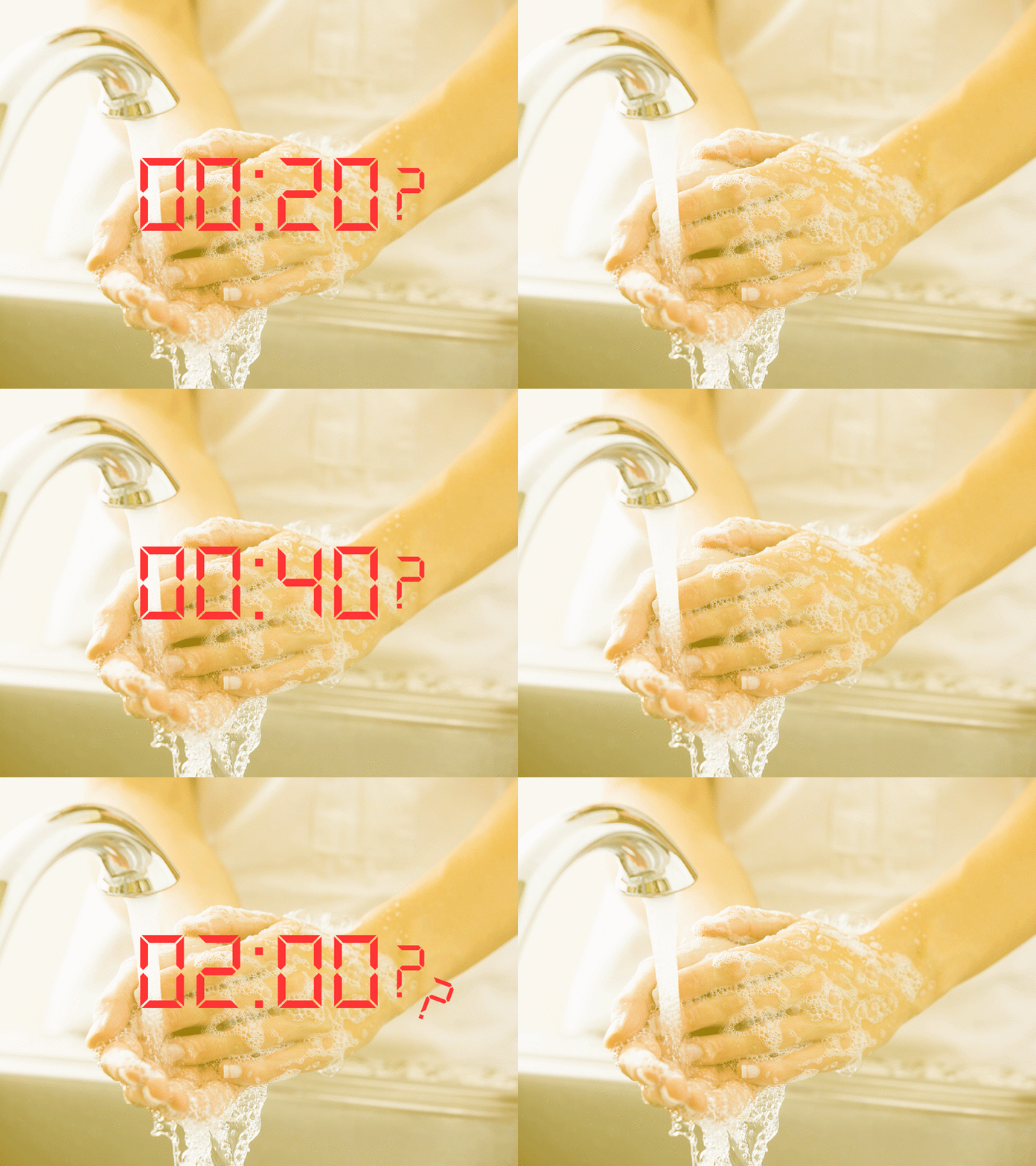
Soap and water work because soap physically disrupts the outer membrane of enveloped viruses, which includes influenza, coronaviruses, and RSV. The disruption causes the virus to fall apart before it ever reaches your mucous membranes. But the mechanism requires friction and time. A quick rinse under the tap is not handwashing. Twenty seconds of actual scrubbing, covering the backs of hands, between fingers, and under nails, is what moves the dial.
The moments that matter most are specific: after blowing your nose, after touching surfaces in public, before preparing food, after being around someone who is sick. Those are the high-risk transition points where viruses move from hands into the body.
Alcohol-based hand sanitizers with at least 60% alcohol work as a substitute when soap and water isn’t available. But there’s an important caveat. Norovirus, the stomach bug most people call “stomach flu,” is resistant to alcohol. If GI illness is circulating, soap and water is non-negotiable, hand sanitizer won’t touch it.
One thing I keep coming back to: people are most diligent about handwashing when they already feel sick. The window that actually prevents transmission is the two to three days before you feel noticeably ill, when you’re shedding virus with no obvious symptoms to remind you to be careful. Consistent handwashing when you feel fine is where the protective effect lives.
2. Clean the Surfaces That Actually Get Touched
Disinfecting every surface in the house is effort spent in the wrong direction.
Influenza can survive on hard surfaces for up to 24 hours. RSV survives for several hours on countertops. The risk isn’t evenly distributed across your home, though. It concentrates on the surfaces that multiple people touch repeatedly throughout the day, and those are almost never the ones people automatically think of.
High-touch surfaces to prioritize when someone is sick or during high transmission periods:
[ ] All doorknobs and door handles (interior and exterior)
[ ] Faucet handles in kitchen and bathrooms
[ ] Light switches throughout the house
[ ] Shared TV remotes, game controllers, streaming devices
[ ] Phones and tablets used by multiple people
[ ] Refrigerator handle
[ ] Kitchen cabinet handles used during meal prep
[ ] Shared keyboards and computer mice
[ ] Stair railings
[ ] Car door handles and interior grab handles
[ ] Dishwasher and microwave handles
Bathroom faucets and the toilet flush handle get wiped down regularly because people think about them. The fridge handle and car interior almost never do, even though they’re touched dozens of times a day by everyone in the household.
For most respiratory viruses, a standard EPA-registered household disinfectant wipe or spray does the job. Norovirus requires a bleach-based product specifically. Most quaternary ammonium disinfectants and many alcohol-based products don’t inactivate it reliably, so if stomach illness is in the house, check the label for norovirus efficacy before you reach for what’s under the sink.
Frequency beats intensity here. Wiping down those high-touch surfaces once a day during active illness is more effective than doing a major deep-clean every few days while ignoring them in between.
The Daily Health Updates Virus Prevention category has more specific guidance if you want to dig into which disinfectants work against particular virus types.
3. Think About the Air in Your Home
This one became more clearly understood after 2020, but it applies to respiratory viruses in general, not just one specific pathogen.
Respiratory viruses spread primarily through larger droplets, the ones that land on surfaces or get inhaled in close contact. But smaller aerosol particles also play a role, particularly in enclosed, poorly ventilated spaces over longer time periods. The practical implication: the air in your home is part of the transmission picture.
Opening windows when it’s possible lowers the concentration of airborne particles in shared rooms. This isn’t always realistic in cold weather, but even brief ventilation during the day makes a difference. HEPA air purifiers in shared living areas or in the bedroom of someone who’s sick are worth considering for households with immunocompromised or elderly members. A true HEPA filter captures particles down to 0.3 microns, which covers the aerosol particle range for respiratory viruses.
Indoor humidity is worth mentioning too, and it tends to get overlooked. Heating systems in winter drop indoor humidity sometimes dramatically, and air below about 30% humidity dries out the mucous membranes that serve as the respiratory tract’s first physical barrier. Keeping humidity between 40 and 60% supports that function. A basic hygrometer costs a few dollars and tells you where your home actually sits. This is a supporting layer, not the headline intervention, but it has genuine biological rationale.
4. The Behavioral Piece People Undervalue
Staying home when sick is obvious enough that most people nod along and then go to work anyway. So it’s worth spelling out the actual reasoning.
Most respiratory viruses shed at the highest levels in the first 24 to 72 hours of symptoms. Influenza specifically is most contagious during that window, and some people shed virus before symptoms appear at all. The standard guidance of staying home until 24 hours fever-free exists because fever is a proxy for active viral replication, not because the virus is gone. “Feeling better” is not the same as “no longer contagious.”
Not sharing cups, utensils, and towels during active illness closes an easy transmission route. This feels basic but it consistently slips in households where people are moving quickly or where the sick person is a child and the adults are managing everything else.
Distance, when a vulnerable person is involved, is rational. If a household member has RSV and an elderly parent is scheduled to visit, postponing is not overcautious. It’s an accurate assessment of risk for someone for whom RSV can become pneumonia. The Health Recovery section at Daily Health Updates has practical guidance for managing illness without complete household lockdown.
5. Immune Resilience Doesn’t Come from Supplements Taken Acutely
This is the section I find myself explaining most often, because the gap between what people spend money on and what actually helps is significant.
Sleep is the immune intervention with the strongest evidence, and it’s the one that gets cut first. A study published in the journal SLEEP followed 164 adults, exposed them to rhinovirus, and tracked who got sick. People sleeping fewer than six hours per night were approximately four times more likely to develop a cold than those sleeping seven hours or more. That’s a large effect for something most people treat as optional.
Vitamin D deficiency is associated with higher susceptibility to respiratory tract infections across multiple meta-analyses. The association is strongest in people who are actually deficient, which in Northern climates and during winter months is a real portion of the population. This is worth checking with a blood test rather than supplementing randomly, but the connection is real and not wellness-world noise.
The supplement with the best acute evidence for respiratory viruses is zinc. A 2017 Cochrane review found statistically significant reduction in cold duration when zinc lozenges or syrup were started within the first 24 hours of symptom onset. It appears to interfere with viral replication directly. Elderberry has some evidence but it’s less consistent. High-dose vitamin C for cold treatment has produced only modest results across trials.
The Health Immunity resources at Daily Health Updates goes into more detail on the evidence base for common immune support strategies, including which ones have rigorous backing and which ones are mostly marketing.
FAQs
Do air purifiers actually prevent viruses from spreading at home?
They help but they’re not a primary prevention strategy. A HEPA air purifier in the room of a sick person, or in a shared living space, reduces the concentration of aerosol particles over time. They work best as a supporting layer alongside handwashing and surface cleaning, not as a substitute for those. For households with immunocompromised members, they’re worth the investment.
How long after someone recovers from a cold should I wait before having people over?
The general guideline is 24 to 48 hours after all symptoms resolve. For influenza specifically, most guidance recommends waiting at least five to seven days from symptom onset even after fever resolves. If your guest is elderly or immunocompromised, the conservative end of those ranges is worth taking seriously.
My kids keep bringing home colds from school. Is there anything I can do?
You can reduce transmission within the household, but kids in group settings will be exposed to viruses as part of how immune systems develop. The most useful habits are consistent handwashing on arrival home, keeping kids home when they’re genuinely symptomatic rather than pushing through, and making sure they’re getting enough sleep. There’s no supplement that substitutes for those three things.
Should I wear a mask in my own home when someone is sick?
For healthy adults in a household with other healthy adults, the benefit is modest. For a household member who is elderly, pregnant, or immunocompromised, it’s a reasonable protective measure, particularly in close contact situations. A well-fitted N95 or KN95 provides meaningfully more protection than a cloth mask in this context.
Does humidity level really matter for virus spread?
It affects the respiratory tract’s ability to defend itself, which matters. Very low indoor humidity impairs mucociliary clearance, the mechanism that physically moves pathogens out of the airway. It doesn’t directly affect viral survival on surfaces the way temperature does, but supporting the body’s own mechanical defenses is a real effect. A humidity level of 40 to 60% is a reasonable target.
Soap and water, consistent surface cleaning, sleep, and staying home when sick are the interventions with the most evidence and the lowest cost. Everything else makes sense as a second layer once those are genuinely in place.