One of the misconceptions I keep running into, especially during the fall when clients start thinking about staying well through winter, is that flu prevention and norovirus prevention are basically the same thing. Get your flu shot, wash your hands, spray some Lysol on the doorknobs, and you’re covered for both.
The logic is understandable. Both viruses circulate in the same months. Both make you feel miserable. The general advice of “wash your hands and clean surfaces” sounds equally applicable to any gastrointestinal or respiratory illness going around.
But the biology here matters a lot, and these two viruses are genuinely different in ways that change what “prevention” actually requires. One of them is meaningfully harder to prevent than the other. And it’s not the one most people guess.
1. How These Two Viruses Are Built, and Why That Changes Everything
The most important structural difference between influenza and norovirus has nothing to do with symptoms. It’s about what’s on the outside of each virus particle.
Influenza is an enveloped virus. It has a lipid outer layer, a membrane made of fats, that it picks up from the host cell during replication. This envelope is essential for the virus to infect new cells, and it’s also its structural weak point. Lipid membranes are disrupted readily by alcohols, detergents, and most common disinfectants. This is why 60% alcohol hand sanitizer works against flu: it dissolves the lipid envelope, and the virus can no longer function.
Norovirus is non-enveloped. Its genetic material is protected by a hard protein shell called a capsid, with no lipid layer surrounding it. That capsid is significantly more resistant to disinfectants, temperature extremes, drying, and environmental stress. Alcohol, at any concentration, does not reliably inactivate norovirus. The CDC recommends soap and water over hand sanitizer specifically when dealing with norovirus exposure, because the physical action of scrubbing and rinsing removes the virus from hands more effectively than alcohol can.
That one structural difference, enveloped versus non-enveloped, explains almost everything that follows in this comparison.
2. Surface Survival and What Your Cleaning Products Actually Do
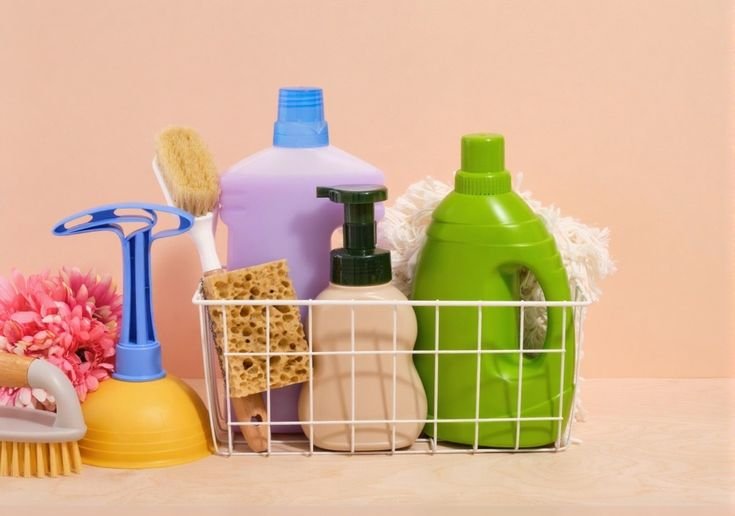
Influenza survives on hard, non-porous surfaces for 24 to 48 hours under typical indoor conditions. That’s a real and meaningful window, but most EPA-registered household disinfectants handle it without issue: 70% isopropyl alcohol, bleach solutions, quaternary ammonium compounds. Most sprays already under the average kitchen sink will work on flu.
Norovirus is considerably more persistent. Multiple studies have found norovirus particles viable on hard surfaces for days to weeks, with some laboratory data showing persistence beyond two weeks. A 2010 paper in the Journal of Medical Virology documented norovirus surviving on stainless steel at room temperature for several days under conditions designed to approximate real household environments. And the disinfectant requirements are stricter: the CDC recommends a bleach solution of 1,000 to 5,000 parts per million of chlorine, roughly 5 to 25 tablespoons of household bleach per gallon of water, for thorough norovirus disinfection. Many common spray disinfectants that work on influenza are not effective against norovirus unless they’re specifically listed on the EPA’s List G or List Q for human norovirus.
The practical gap this creates is that most households are using the same cleaning products against both viruses, without knowing that the one requiring more aggressive disinfection is also the one for which there is no vaccine.
Norovirus vs Flu: Prevention Comparison at a Glance
| Prevention Factor | Influenza (Flu) | Norovirus |
|---|---|---|
| Vaccine available | Yes (annual seasonal vaccine) | No approved vaccine for general use |
| Approximate infectious dose | Hundreds to thousands of particles | As few as 10 to 18 particles |
| Virus structure | Enveloped (lipid layer) | Non-enveloped (protein capsid) |
| Surface survival (hard surfaces) | 24 to 48 hours | Days to weeks |
| Alcohol hand sanitizer effective | Yes (at 60%+ ethanol) | No |
| Best hand hygiene | Soap and water or hand sanitizer | Soap and water only |
| Standard spray disinfectants | Most EPA-registered products work | Requires bleach or EPA List G/Q products |
| Foodborne transmission | Rare | Yes, especially raw shellfish and produce |
| Airborne transmission | Yes, respiratory droplets and aerosols | Yes, aerosolized vomit particles |
3. The Vaccine Gap: One Has It, One Doesn’t
The influenza vaccine is the primary prevention tool for flu, and it has no norovirus equivalent. That single fact reshapes the entire comparison.
The flu shot is formulated annually because influenza viruses mutate rapidly and the circulating strains shift from year to year. The CDC works with global health agencies to predict which strains will dominate each season and builds the vaccine around those predictions. The match isn’t always perfect. In years when circulating strains diverge from the vaccine formulation, efficacy against confirmed flu illness can drop to around 40 to 50%. In well-matched years, it runs closer to 60 to 65% for healthy adults. Neither number is especially impressive, but the vaccine also tends to reduce illness severity even when it doesn’t prevent infection entirely, and for high-risk groups, including older adults and young children, that reduction in severity is often what matters most.

Norovirus has no approved vaccine for general public use at this point. Several candidates have been in clinical development, including a Takeda candidate that progressed into late-stage trials, but nothing is widely available. Part of the challenge is that norovirus is highly diverse: there are multiple genogroups and dozens of genotypes, with GII.4 strains responsible for the majority of global outbreaks but not all of them. Building a vaccine that covers enough strains to be broadly useful is a genuine scientific problem, and it hasn’t been solved yet.
For households managing an active illness, the healing and recovery guidance on Daily Health Updates walks through practical management steps that apply specifically to viral gastroenteritis like norovirus.
What the vaccine gap means in prevention terms is simply this: every defense against norovirus has to come from behavior and environmental hygiene. There is no pharmaceutical shortcut. The effort required to actually prevent norovirus rests entirely on the consistency of what you do with your hands, your surfaces, and your food.
4. The Infectious Dose Problem, Which Is the Part That Really Catches People Off Guard
The infectious dose for a pathogen is the number of viral particles required to establish an infection in a susceptible person. For influenza, estimates put this somewhere in the hundreds to low thousands of particles, varying by strain and the immune status of the exposed individual.
For norovirus, the infectious dose is dramatically lower. Controlled studies using human volunteers, and yes, there are researchers who deliberately expose healthy people to measure this, have established that as few as 10 to 18 norovirus particles are sufficient to cause infection in susceptible individuals. Some estimates suggest even fewer under certain conditions.
To put that in perspective: a single gram of stool from an infected person can contain billions of norovirus particles. A microscopic amount of biological material on a surface may contain many thousands of times the infectious dose. You can’t see it. You can’t smell it. In most real-world scenarios, there’s no visible indication that a surface is contaminated.
This is why norovirus spreads so efficiently on cruise ships, in care facilities, and in restaurant kitchens. One infected food handler who doesn’t wash their hands properly before touching raw food can expose dozens of people to far more than enough viral particles to cause illness. The kitchen doesn’t have to be visibly dirty. Raw oysters from water contaminated with human sewage can concentrate norovirus to infectious levels and show absolutely no external signs of it.
I’ll add a side note here because I find it genuinely striking from a microbiology perspective: norovirus can also aerosolize through projectile vomiting. When someone vomits forcefully, microscopic droplets of the vomit become airborne and settle on nearby surfaces, on countertops, on other people’s clothes, on items across the room. Anyone who later touches those surfaces and then touches their face has potentially received a dose. Influenza also spreads through aerosols from coughing and sneezing, but the forceful ejection of vomit combined with the ultra-low infectious dose of norovirus makes the aerosol route of norovirus particularly efficient in enclosed spaces. This is also a significant part of why standard cloth masks, which are designed for respiratory droplets, offer very limited protection against norovirus transmission. Anyway, the point is that the combination of persistence, low infectious dose, and multiple transmission routes makes norovirus a more difficult prevention target than flu on essentially every dimension.
5. Building a Prevention Approach That Actually Accounts for Both
For flu, the framework is well-established and layered: annual vaccination as the primary tool, consistent hand hygiene as a support layer, surface disinfection with standard products during flu season, and staying home while infectious to limit airborne spread. The safety alerts and prevention coverage at Daily Health Updates is a good complement to this for households thinking about seasonal illness broadly.
Norovirus prevention has to be adapted specifically to what the virus actually is:
Hand hygiene requires soap and water, not hand sanitizer. This is the single most commonly misunderstood piece. Lather thoroughly, scrub for at least 20 seconds including between fingers and under nails, and rinse under running water. The mechanical action of this process is what removes the virus from skin. It’s especially critical before food preparation, before eating, and after any contact with a sick person or their immediate environment.
Surface disinfection must use a bleach-based solution or a product specifically listed for norovirus on the EPA registry. Quaternary ammonium compounds, which show up in many multi-surface sprays, are generally not effective against norovirus. Reading the label isn’t optional here.
Food safety becomes a distinct prevention layer for norovirus in a way it simply doesn’t for flu. Raw shellfish, particularly oysters, pose a specific risk because they filter-feed from water that may carry norovirus from human sewage, concentrating the virus in their tissue. Thorough cooking matters, and the internal temperature needs to reach at least 140°F (60°C) to inactivate the virus. Washing raw produce thoroughly and keeping ill individuals out of any food preparation role, during illness and for at least 48 hours after symptoms resolve, are the two most impactful food-safety measures.
During an active household norovirus outbreak, contamination of surfaces happens more extensively and quickly than most people anticipate. Beginning thorough bleach-based cleaning of bathroom surfaces and all high-contact areas immediately, not after symptoms pass, makes a real difference in whether the illness moves through the household or stays contained. The doctor-backed guidance on Daily Health Updates Org has practical specifics on managing an active viral illness in a household context, including timelines for when surfaces should be prioritized.
6. The Straightforward Answer
Norovirus is harder to prevent than flu.
No vaccine. An infectious dose low enough to fit on the tip of a needle. A protein capsid that laughs at alcohol and outlasts standard disinfectants by days. Transmission through food, aerosolized vomit, and surfaces that remain contaminated longer than most people would ever think to keep cleaning.
But the behavioral tools, soap-and-water handwashing, bleach-based disinfection, careful food handling, and isolation of sick individuals from food preparation, are genuinely effective when they’re applied correctly and at the right moments. The challenge is that “correctly” has a much higher bar for norovirus than most people realize, partly because the illness is so consistently lumped together with flu and treated with the same general strategy that works for one but not the other.
The flu shot earns its annual promotion. But norovirus sits in a prevention category where the burden falls almost entirely on behavior, and the margin for error is narrower. Knowing which illness you’re actually dealing with, and which prevention tools actually match the biology, is the starting point for doing either one well.
FAQs
Is norovirus the same as the stomach flu?
No. “Stomach flu” is a common informal term, but norovirus has no biological relationship to influenza. Norovirus is a calicivirus that infects the stomach and small intestine, producing vomiting and diarrhea. Influenza is a respiratory illness caused by completely different viruses in the Orthomyxoviridae family. They happen to circulate at similar times of year, which is probably why the confusion persists, but they’re structurally, biologically, and clinically distinct.
My hand sanitizer says it eliminates 99.99% of germs. Doesn’t that include norovirus?
Almost certainly not. Alcohol-based hand sanitizers are effective against enveloped viruses like influenza and SARS-CoV-2, and against many bacteria. Norovirus is non-enveloped, and its protein capsid is resistant to the alcohol concentrations found in commercially available sanitizers. “99.99% of germs” reflects what the product has been laboratory-tested against, and norovirus typically isn’t in that tested category. For norovirus specifically, soap and water is the recommended and effective option.
Can you catch both norovirus and flu at the same time?
You can. It’s uncommon, but both viruses circulate actively during the same winter months, and there’s nothing that prevents co-infection. The resulting illness would likely produce overlapping and confusing symptoms: respiratory symptoms and gastrointestinal symptoms together. If you started antiviral treatment for flu (medications like oseltamivir are most effective when taken within 48 hours of symptom onset), that would reduce flu severity while doing nothing for the norovirus. Each illness would run its own course.
How long are you contagious with norovirus, and when is it safe to go back to work?
With norovirus, symptoms typically last 1 to 3 days, and the standard guidance for returning to work or food handling is at least 48 hours after symptoms fully resolve. But there’s an additional caveat that often gets missed: some people continue shedding norovirus in stool for up to two weeks after feeling completely recovered. This prolonged shedding period is why professional food service guidelines often require longer exclusion periods and why returning to kitchen work too soon is a recognized outbreak risk. For non-food-handling roles, the 48-hour symptom-free window is the generally accepted threshold.
Why do norovirus outbreaks happen so often on cruise ships specifically?
The combination of a closed, densely populated environment with shared food preparation, close quarters, and high turnover of passengers creates near-ideal conditions for norovirus spread. A small number of infected passengers or crew can contaminate buffet surfaces or food with enough viral particles to expose large numbers of people in a short time. The ultra-low infectious dose of norovirus means that even a well-run kitchen with one infected staff member who doesn’t wash hands thoroughly enough can trigger a ship-wide outbreak. Cruise lines have detailed outbreak response protocols specifically for norovirus, including enhanced bleach-based cleaning regimens and enhanced surveillance, precisely because the standard hygiene measures that control most pathogens are not sufficient on their own for this one.
The flu shot gets all the attention because it’s the visible, bookable, once-a-year action. That attention is deserved. But norovirus, which most people think of as “that stomach thing that goes around,” is running a completely different game. It’s built to persist, built to spread efficiently, and built to resist the most common tools people reach for. Treating it the same as flu is where prevention breaks down.