The misconception I keep running into is that six hours is basically fine and a longer sleep on the weekend fixes whatever accumulated during the week. I hear this from people who genuinely care about their health, who are not dismissing sleep as a priority. They’re operating on an outdated mental model of what chronic short sleep actually does, and the outdated model looks like this: tired equals inconvenient but manageable.
The research tells a more specific story. It tells a story about cytokines, natural killer cells, T-cell integrin expression, and antibody production. None of those things are restored by sleeping until noon on a Saturday.
1. The Sleep Debt Myth — Why Your Immune System Doesn’t Accept Weekend Payments
The idea that you can “catch up” on sleep comes from a real phenomenon. Partial recovery from acute sleep deprivation does occur. A few short nights followed by recovery sleep restores some cognitive and physiological function, and that’s well-documented. The word doing a lot of work in that sentence is “some.”
What doesn’t fully recover on a one-for-one basis is immune function. Research led by Dr. Hans Van Dongen at Washington State University (previously Penn State) showed that chronic partial sleep restriction — consistently sleeping around six hours a night, rather than being acutely sleep-deprived for a single night — produces cumulative cognitive impairment that subjects don’t even perceive accurately. The immune picture follows a similar pattern: the damage accumulates without being felt in proportion to how much it’s occurring.
Sleep debt also doesn’t behave like a bank account you can overdraw and repay on schedule.
A 2021 paper in Current Biology tracked metabolic and inflammatory markers in participants who were sleep-restricted for ten days and then given three nights of unrestricted recovery sleep. Some markers improved during recovery. Inflammatory markers tied to immune dysregulation, specifically elevated interleukin-6 (IL-6), did not fully normalize within those three nights. They were still elevated relative to the control group that had not been sleep-deprived at all. That’s important context before we even get into what short sleep does during direct viral exposure.
2. What Sleep Is Actually Doing Inside Your Immune System
Sleep is not passive downtime for immune function. It’s the opposite.
During slow-wave sleep, the body substantially increases production of several cytokines: interleukin-1 (IL-1), interleukin-12 (IL-12), and tumor necrosis factor-alpha (TNF-alpha). These are not generic “immune helper” molecules. IL-12 specifically activates natural killer (NK) cells and drives T-cell differentiation toward type-1 immune responses — the branch of adaptive immunity most responsible for fighting intracellular pathogens including viruses. When slow-wave sleep is shortened or disrupted, this cytokine production is reduced, and the downstream effects on adaptive immunity are measurable.
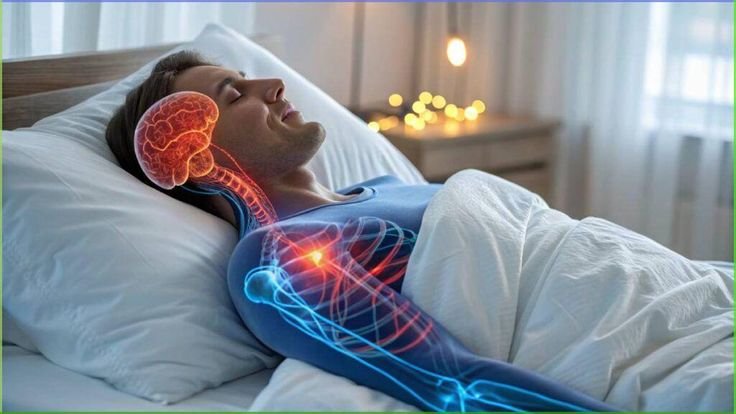
NK cells are the immune system’s rapid-response units. They identify and destroy virus-infected cells before the adaptive immune response has fully ramped up. Their speed matters a lot in the early hours and days of a viral infection. A 2017 study published in the Journal of Experimental Medicine by researchers at UCLA found that a single night of sleep restricted to four hours reduced NK cell cytotoxic activity by approximately 70% compared to a full night’s sleep. That reduction did recover after a normal sleep night, which is relevant, but it shows how quickly this specific defensive capacity drops.
And then there’s the T-cell research, which is some of the most mechanistically precise work in this area. A 2019 study in the Journal of Experimental Medicine by Dimitrov et al. found that during sleep, T-cells expressed significantly higher levels of integrin molecules — the proteins that allow T-cells to attach to target cells and carry out their cytotoxic function. In sleep-deprived subjects, integrin expression was lower. The mechanism involves prostaglandins and adenosine, signaling molecules that are elevated during wakefulness and that actively suppress integrin expression, which means that being awake is, from a T-cell perspective, a state of reduced readiness.
These are not theoretical associations. They are specific, molecular, and measurable.
3. The Numbers: What Controlled Studies on Viral Exposure Show
The most widely cited study on sleep and direct viral susceptibility is Aric Prather and colleagues’ 2015 paper in Sleep journal (Carnegie Mellon University). Researchers enrolled 164 healthy adults, had them wear actigraphy monitors to objectively measure actual sleep duration for one week, then quarantined participants and directly administered rhinovirus via nasal drops.
The results were unambiguous.
People sleeping fewer than six hours per night were 4.2 times more likely to develop a cold compared to those sleeping seven or more hours. This was after controlling for age, BMI, smoking status, and socioeconomic variables. The dose-response relationship held: the shorter the sleep, the higher the risk. An earlier study by Cohen et al. (2009) using subjective sleep reports found a similar pattern, but the 2015 objective actigraphy data made the finding substantially harder to explain away.
The vaccine research is equally telling, because it shows immune function rather than just susceptibility.
A 2002 study by Spiegel, Sheridan, and Van Cauter found that participants who were sleep-deprived following hepatitis A vaccination produced antibody titers less than half those of normally sleeping subjects. A 2012 paper in Sleep by Lange et al. found that subjects sleeping six hours or less had significantly lower antibody responses to hepatitis B vaccination compared to those sleeping seven or more hours, and that this difference in protection persisted for a year after vaccination. Not just the initial titer. The long-term immune memory.
Here’s how the data compares across key immune functions:
| Immune Function | Well-Rested (7-9 hrs) | Sleep-Deprived (under 6 hrs) |
|---|---|---|
| NK cell cytotoxicity | Normal | Reduced ~70% after one restricted night |
| T-cell integrin expression | High; effective target cell adhesion | Reduced; impaired viral clearance capacity |
| Cytokine output (IL-1, IL-12, TNF-alpha) | Robust during slow-wave sleep | Suppressed; dysregulated inflammatory signaling |
| Antibody response to vaccines | Normal, durable titers | 50% lower; reduced long-term protection |
| Cold susceptibility (rhinovirus) | Baseline risk | 4.2x higher risk at under 6 hrs |
| IL-6 after chronic restriction | Within normal range | Elevated; does not normalize after 3 recovery nights |
Reading through that comparison, the “six hours is basically enough” framing becomes increasingly difficult to sustain.
4. The Cortisol Piece — and Why Stress and Short Sleep Compound Each Other
One mechanism that doesn’t get discussed enough in general health coverage is the cortisol connection.
Short sleep elevates cortisol. Cortisol, in elevated and sustained amounts, suppresses cell-mediated immunity — the arm of the immune system that deploys T-cells and NK cells against viral infections. This is part of why chronic sleep loss and chronic psychological stress tend to compound each other’s immunosuppressive effects rather than simply adding together linearly. The pathways overlap, and both routes lead to the same downstream suppression of the immune functions most relevant to fighting viruses.
There’s also a reciprocal relationship worth noting here — and this is a piece of immunology that I find genuinely interesting to think about. When you get sick, the cytokines your immune system releases to fight the infection, specifically IL-1, TNF-alpha, and IL-6, are the same molecules that drive sleepiness. Your body makes you tired on purpose during illness. The increased sleep demand is not incidental. Slow-wave sleep enhances immunological memory formation, which is how the body encodes recognition of pathogens it has encountered. The research on this goes back decades, but it remains underappreciated in general health communication.
I want to be careful here though, because while “rest when sick” is clinically well-supported, the specific dose of additional sleep that optimally supports recovery is less precisely defined than the data on sleep and susceptibility. The mechanism is clear. The exact prescription is less so.
If you’re factoring sleep into a broader infection prevention approach, virus prevention basics at Daily Health Updates covers how sleep interacts with the other protective behaviors that actually have strong evidence behind them.
5. What Actually Helps Rebuild Immune-Relevant Sleep
This section could become a generic sleep hygiene checklist, which is not what the evidence calls for. Most people with consistently short sleep are not sleeping less because they don’t know about blue light or cool bedrooms. They’re sleeping less because of schedule constraints, shift work, caregiving obligations, and occupational demands. Acknowledging that structural reality matters before offering any behavioral suggestions, otherwise the suggestions are functionally useless for a large proportion of people who read them.
For those who do have flexibility:
Consistent sleep and wake timing has the strongest evidence base for improving sleep architecture. Circadian regularity, keeping the same schedule within about 30 minutes on weekends as on weekdays, anchors the body’s internal clock in a way that improves slow-wave sleep depth. Sleeping at irregular times across the week fragments slow-wave sleep even when total duration looks adequate on paper.
Timing within the night also matters in a specific way. Slow-wave sleep is disproportionately concentrated in the first half of the night. Going to bed earlier (rather than just sleeping later in the morning) provides more access to slow-wave sleep. This is relevant for immune function specifically, because it’s slow-wave sleep that drives the cytokine production outlined in section 2.
The question of presymptomatic contagion is also connected to immune competence in a practical way. A well-functioning immune system clears viral loads faster and may reduce the window during which a person is infectious before symptoms appear. If you’re curious about that connection, Daily Health Updates’ coverage of presymptomatic viral spread is worth reading alongside this.
Frequently Asked Questions
Q: I feel fine on six hours. Does that mean my immune system is fine on six hours too?
Subjective adaptation to sleep restriction is well-documented and is precisely the problem. Research by Van Dongen and colleagues showed that people who are chronically sleep-restricted stop perceiving themselves as impaired even as objective performance measures decline. The same disconnect applies to immune function. Feeling functional on six hours is not evidence that your cytokine production, NK cell activity, or antibody responses are unaffected. The Prather 2015 rhinovirus study included participants who presumably also felt fine before being exposed to the virus.
Q: Does the quality of sleep matter as much as the duration?
Both matter, and they interact. Fragmented sleep, with frequent awakenings, impairs slow-wave sleep quality even when total time in bed looks adequate. Conditions like sleep apnea cause repeated micro-arousals that consistently disrupt slow-wave architecture, and research on sleep apnea populations shows elevated inflammatory markers consistent with immune disruption even at seemingly normal total sleep durations. If you’re regularly waking during the night, total hours is not the only variable to address.
Q: My kids get every virus that goes around at school. Should I be looking at their sleep?
Sleep is worth considering as a contributing factor. School-age children typically need 9 to 11 hours per night, and adolescents need 8 to 10 hours. The immune mechanisms are the same as in adults. That said, school-age children are also exposed to a high volume of novel pathogens they haven’t developed immunity to yet, so frequent colds in young children also reflect normal immune system development rather than necessarily a deficiency. Both factors can be true at once. If a child is consistently sleeping two or more hours below their recommended range, that’s a reasonable place to start.
Q: Do melatonin supplements improve immune function?
Melatonin has immunomodulatory properties in in vitro and animal research. Human clinical evidence for melatonin supplementation directly improving immune function is much weaker and inconsistent. Where melatonin is reasonably well-supported is in shifting circadian timing, particularly for jet lag and shift work situations, which indirectly supports better slow-wave sleep architecture. Taking it as a direct immune supplement at standard supplemental doses isn’t backed by the current human evidence base.
Q: If I get sick, does that mean I’ve been sleeping badly?
Not necessarily. Infection reflects a combination of exposure level and immune status. You can sleep well and still get sick if pathogen exposure was high enough, and you can sleep poorly without getting sick if exposure was low. But if you’re getting sick more often than usual over several months, consistently short or disrupted sleep is one of the more common contributing factors to evaluate, along with stress load and nutritional status. Respiratory symptoms that are hard to categorize are also worth understanding on their own terms. The RSV vs. cold comparison at Daily Health Updates is a practical reference for distinguishing what you might actually have.
Sleep doesn’t have its own clinical specialty the way cardiology or oncology does, so it tends to get categorized as a lifestyle factor rather than a physiological one. But the immune mechanisms affected by short sleep are not subtle or metaphorical. NK cell activity, T-cell function, cytokine regulation, and antibody durability are all measurably different after a week of six-hour nights. The research on this has moved past the question of whether it matters, and into the harder question of how to build the conditions for it to actually change.