
The claim is everywhere now. Intermittent fasting “resets” the immune system, “detoxes” the body, gives your white blood cells a chance to regenerate, makes you harder to infect. It’s not fringe anymore. These talking points show up in wellness podcasts, supplement company newsletters, and research-adjacent social media accounts with followings in the hundreds of thousands.
I’ve been watching this particular claim grow for years, and the honest assessment is that some of it is grounded in real science and some of it is a significant overextension of what that science actually says. The version circulating in popular health content tends to collapse a complicated, context-dependent biology into a single confident takeaway, and that’s the part that sends people making decisions they probably shouldn’t.
The research on IF and immune function is genuinely interesting. It’s also genuinely incomplete, and the gap between what the studies show and what the summaries claim is larger than most people realize.
1. Where the “IF Resets Your Immune System” Claim Actually Came From
The claim didn’t appear from nowhere. There are legitimate scientific findings behind it, which is part of why it spread so effectively. Understanding the origin matters because it reveals just how far the popular framing has traveled from the original context.
The most-cited foundational piece is a 2014 study published in Cell Stem Cell by Valter Longo and colleagues at the University of Southern California. Their research examined the effects of prolonged fasting (two to four days) on hematopoietic stem cells, the cells in bone marrow that produce blood and immune cells. Under the metabolic stress of extended fasting, white blood cell counts dropped significantly. When eating resumed, the bone marrow signaled for fresh immune cell production, effectively replacing older or damaged cells with newer ones. The researchers described this as a form of regeneration.
That is a meaningful finding. But it was observed under conditions of multi-day fasting, largely in mice and in cancer patients undergoing chemotherapy where dampening a damaged immune system and then rebuilding it had direct clinical relevance. The internet subsequently applied this finding to 16-hour eating windows, to daily 16:8 protocols, to essentially any dietary schedule that involves not eating for part of the day, and presented it as if the regenerative effect was the expected outcome. It isn’t.
The second pillar of the immunity claim is autophagy. The term comes from the Greek for “self-eating,” and it refers to a cellular housekeeping process through which cells break down and recycle damaged proteins, malfunctioning organelles, and in some cases intracellular pathogens, including viral particles. Yoshinori Ohsumi received the Nobel Prize in Physiology or Medicine in 2016 for foundational work on autophagy mechanisms. The science is real and the immune relevance is real: clearing damaged cellular material reduces the chronic inflammatory load that accumulates when cells can’t clean house effectively.
The problem is that autophagy is not a binary switch that activates at hour 16 of your eating window. Estimates of when meaningful autophagy induction occurs in humans vary substantially in the literature, ranging from 16 hours to considerably longer, depending on baseline glycogen stores, metabolic rate, prior diet composition, and individual variation. The confident framing in wellness media suggests it’s a reliable feature of daily 16:8. The actual evidence is far more equivocal.
2. What Fasting Does to Inflammation, Specifically
Separate from autophagy, there is more direct human evidence that intermittent fasting affects inflammatory signaling, and this is probably the strongest leg of the immunity argument.
A 2019 study published in Immunity (Goldberg et al.) found that fasting-induced production of beta-hydroxybutyrate, a ketone body produced when glucose is depleted, actively suppressed NLRP3 inflammasome activity. The NLRP3 inflammasome is an intracellular protein complex that plays a central role in triggering inflammatory cytokine release, specifically interleukin-1 beta (IL-1β). Chronic NLRP3 overactivation is implicated in type 2 diabetes, atherosclerosis, gout, and certain autoimmune conditions. A mechanism that moderates its activity has genuine clinical relevance for long-term inflammatory disease risk.
Studies on Ramadan fasting, Islamic fasting from dawn to sunset that typically spans 12-16 hours per day for 30 consecutive days, have also documented measurable changes in immune cell populations and inflammatory markers. A 2020 review in Frontiers in Nutrition that synthesized 22 Ramadan fasting studies found reductions in CRP (C-reactive protein, a broad marker of systemic inflammation) as well as changes in lymphocyte counts and natural killer cell activity. Results varied across individual studies, but the direction of effect for inflammatory markers was fairly consistent.

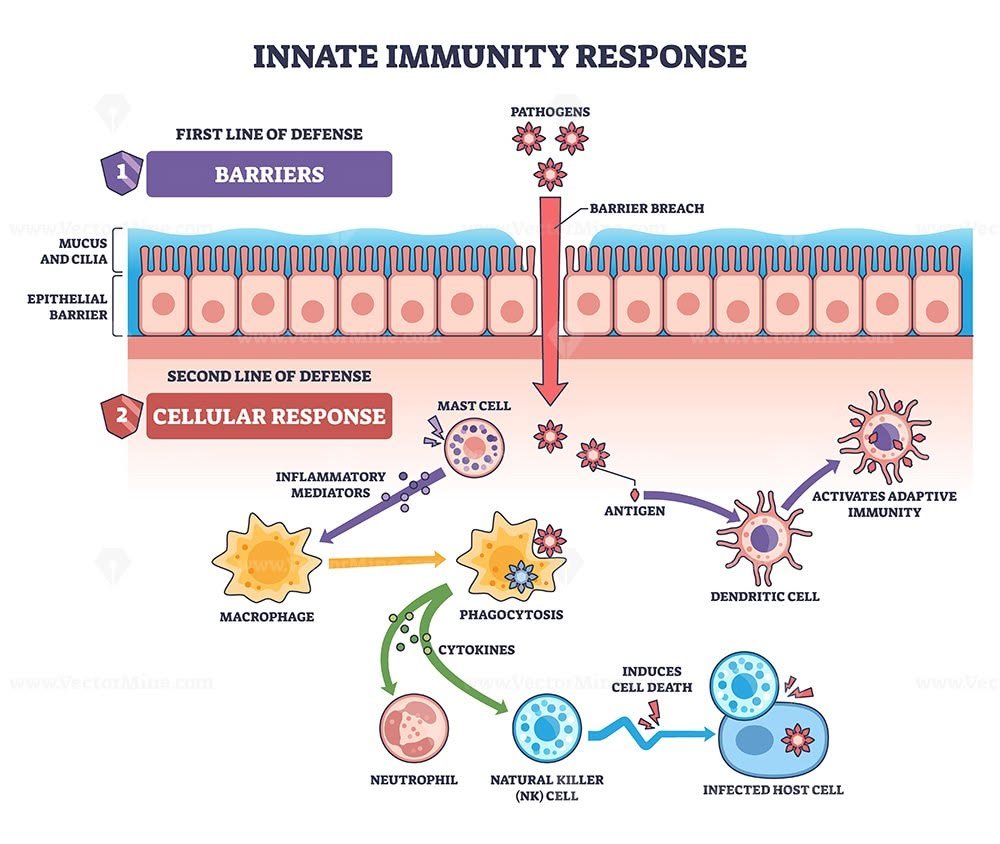
What’s worth being precise about here is that reduced inflammation is not equivalent to a more powerful immune response. The immune system has two general operational modes: inflammatory and regulatory. More inflammation is not inherently better immune function. Chronic low-grade inflammation, the kind associated with poor metabolic health, excess body fat, poor sleep, and chronic stress, is actively harmful to long-term immune regulation. Reducing that chronic background noise is genuinely valuable. But calling it “boosting immunity” conflates two different things. Lowering chronic inflammation and enhancing the ability to mount an acute immune response are not the same biological event.
Understanding what your immune system is actually doing in different states is worth its own read. The Daily Health Updates piece on the basics of how immune function works covers the foundational mechanisms clearly.
3. The One Context Where IF Becomes a Genuine Concern
Here is where the popular framing creates problems beyond oversimplification.
A 2016 paper in Cell by Ruslan Medzhitov’s group at Yale examined glucose metabolism during infection in mice and found something striking and counterintuitive. Animals infected with Listeria (a bacterial pathogen) survived at higher rates when given supplemental glucose. Animals infected with influenza A (a viral pathogen) survived at higher rates when glucose was withheld. The researchers interpreted this as evidence that the metabolic requirements for mounting an effective immune response are infection-type dependent, and that feeding or fasting during active illness may genuinely shift outcomes in opposite directions depending on the pathogen.
This is mouse data. It should not be directly translated into specific human dietary recommendations, and the researchers themselves were careful to note that. But it illustrates something the popular “fasting is good for immunity” framing completely ignores: the relationship between metabolic state and immune response is context-specific in ways that a blanket recommendation cannot capture.
The more practical concern for most people is simpler: when you’re actively sick with a respiratory infection, particularly one that produces a fever, your basal metabolic rate increases substantially. A one-degree Celsius rise in body temperature elevates metabolic demand by roughly 7%. Your immune system is simultaneously synthesizing antibodies, expanding specific lymphocyte populations, producing acute phase proteins, and sustaining the cytokine signaling needed to coordinate the response. All of that is energetically expensive. Protein specifically is essential, because antibody production and immune cell proliferation require amino acid substrate. A 16:8 fasting window that works well for everyday metabolic health may be restricting exactly what the body needs most during active infection.
The folk saying “feed a cold, starve a fever” has no solid clinical backing. It’s not a prescription in either direction. The practical guidance that aligns with the current evidence is closer to: when you’re sick, eat as much as you can tolerate, prioritize protein and hydration, and don’t impose a fasting window on top of an acute illness as a strategy to “help your body detox.” That’s not what the science supports.
4. What the Evidence Actually Supports, Protocol by Protocol
The research doesn’t treat all intermittent fasting protocols as interchangeable, and neither should anyone evaluating this question.
| Protocol | Fasting Duration | Autophagy Evidence in Humans | Chronic Inflammation Data | Appropriate During Active Illness |
|---|---|---|---|---|
| 16:8 (daily time-restricted eating) | 16 hours | Weak to modest, inconsistent | Some CRP and IL-6 reduction | No |
| 5:2 (two low-calorie days per week) | Caloric restriction, not full fast | Minimal direct evidence | Limited studies | No |
| OMAD (one meal a day) | 22-23 hours | Stronger theoretical signal, less studied | Understudied relative to 16:8 | No |
| Prolonged fast (2-4 days) | 48-96 hours | Strongest evidence, from Longo’s work | Most dramatic immune cell data | No, requires medical supervision |
| Ramadan-style (12-16 hrs daily for 30 days) | 12-16 hours | Limited direct evidence | Most real-world human data available | No |
One column is consistent across every row. No intermittent fasting protocol has supporting evidence for use during active illness, and some have evidence suggesting it may interfere with the acute immune response by restricting energy and nutrient availability when demand is highest.
The protocols with the most dramatic immune-related findings, specifically the white blood cell regeneration observed in Longo’s research, are prolonged multi-day fasts studied in specific clinical populations. Most people aren’t doing that, and the cancer chemotherapy context in which that research was conducted is not equivalent to a healthy person trying to “strengthen” their immune system between sick days.
For people doing standard 16:8 fasting with nutritionally adequate meals during the eating window, the evidence points toward modest reductions in chronic inflammatory markers. That’s meaningful for metabolic health and possibly for long-term disease risk. Whether it translates into fewer acute infections or faster recovery from illness is a claim the current literature cannot clearly support.
For a grounded overview of what actually works for preventing viral illness, the Daily Health Updates guide on virus prevention fundamentals for families is worth pairing with this one, because IF fits into a broader picture that includes sleep, nutrition, stress management, and basic hygiene.
5. A Grounded Framework for IF and Immune Health
For healthy, well-nourished adults who are not actively fighting an infection, regular time-restricted eating with an adequate nutritional window is a reasonable dietary pattern. The evidence for meaningful reduction in chronic inflammatory markers is the most consistent finding across the IF and immune literature. Autophagy induction claims require more nuance than they typically receive in popular coverage. The white blood cell regeneration finding is real but applies to prolonged fasting, not a standard 16-hour window.
For anyone who feels their immune function is already compromised, or who notices they’re catching everything that circulates in their household or office, the fundamentals have a larger evidence base than fasting does. Sleep is the most robustly documented immune regulator. Chronic stress meaningfully impairs specific arms of immune defense. Nutritional deficiencies, including zinc, vitamin C, vitamin D, and inadequate protein, each compromise different immune functions in documented ways. Daily Health Updates covers some of the more recognizable patterns in their piece on signs that your immune system may already be struggling.
And here is where I’d step back from the fasting question for a moment, because it matters: many people who credit IF with improved immune resilience are simultaneously making other significant changes. Cleaner diets, more consistent sleep schedules, less alcohol, more movement. All of those independently support immune function. Attributing the improvement specifically to the fasting window, without accounting for those parallel changes, is methodologically weak. The effect may be real, it may also be one of several interacting factors that the fasting gets credit for by association.
The populations for whom IF is not an appropriate self-experiment from an immune standpoint include people with a history of eating disorders, those who are pregnant or breastfeeding, individuals managing diabetes or other metabolic conditions with medication, and anyone who is underweight or malnourished. In those groups, the physiology of fasting is meaningfully different from a healthy metabolic baseline, and immune implications shift accordingly.
One more thing worth considering if you’re reading this because you’re trying to get sick less often: viral exposure and immune defense are two separate variables. Daily Health Updates has a useful piece on whether you can spread a virus before symptoms appear, which is relevant to understanding how infection happens independently of how your immune system is doing. Strengthening immune defense matters, but reducing exposure to active viral shedding operates on a different track.
Closing
Intermittent fasting has a real and interesting relationship with immune regulation. That relationship is modest, context-specific, and most clearly supported by data on chronic inflammation rather than the more dramatic claims about immune “resetting” or “boosting” that tend to circulate. The science is worth knowing accurately, because it changes how the practice actually applies.
Fasting when healthy, with a nutritionally adequate eating window, on a consistent long-term basis: plausible modest benefit for inflammatory regulation. Fasting during an active illness: not supported and potentially counterproductive. Choosing a fasting protocol as a substitute for sleep, adequate nutrition, and stress management: not what the evidence recommends.
FAQs
Is the “immune system reset” claim about intermittent fasting real? Partly, and in a more limited way than the popular version suggests. The regeneration finding comes from Valter Longo’s research on prolonged fasting of two to four days, primarily studied in mice and in cancer patients undergoing chemotherapy. The bone marrow was observed to deplete and then regenerate white blood cell populations after refeeding. Standard 16:8 fasting does not produce this effect with the same magnitude or clarity. The finding is real; the extrapolation to everyday fasting windows is not well-supported.
Should I continue my intermittent fasting protocol if I get sick? No, and this is probably the most practical piece of guidance in this entire piece. When you’re actively infected, especially with a fever, your immune system’s energy and protein demands increase significantly. Maintaining a fasting window during acute illness restricts the nutritional substrate your immune system needs for antibody production and cell proliferation. Eat when sick. Prioritize protein and hydration. Resume your regular fasting schedule once you’re recovered.
Does autophagy actually activate during a 16-hour fast? Possibly, but the threshold is not clearly established in the human literature. Autophagy induction in humans depends on multiple variables including prior glycogen levels, diet composition, physical activity, and individual metabolic rate. The timeline of 16-24 hours cited in popular health media is based on extrapolation from animal data and limited human studies. Meaningful autophagy likely occurs somewhere in this window for some people, but it’s not a reliable, universal feature of a standard 16:8 protocol.
I’ve been doing 16:8 for six months and I feel like I get sick less. Is the fasting responsible? It may be contributing, but other simultaneous changes are the harder-to-isolate part. People who adopt consistent IF practices frequently also improve their overall diet quality, sleep schedules, and physical activity at the same time. Each of those factors independently supports immune function. The fasting window may be part of it, other factors may also be doing meaningful work, and teasing apart the individual contribution without a controlled study isn’t really possible.
Who should not try intermittent fasting for immune health reasons? People with a current or historical eating disorder, those who are pregnant or breastfeeding, individuals managing diabetes or other metabolic conditions with insulin or glucose-regulating medication, and anyone who is underweight or malnourished. In these populations, the metabolic consequences of fasting differ substantially from a healthy baseline, and the immune implications are not the same as in the research populations studied. Medical guidance before starting any fasting protocol is appropriate for anyone in these categories.