“How long is this supposed to last?”
That question shows up in my inbox more than almost any other. Sometimes it is from someone who had the flu three weeks ago and still cannot make it through an afternoon without needing to lie down. Sometimes it is from a person who had a mild cold that cleared up quickly but left them dragging for a month. Different viruses, different people, same confusing experience: the infection is over, but the body has not gotten the memo.
Post-viral fatigue is real, well-documented, and genuinely underexplained in most patient conversations. The answers to how long it lasts, why it happens, and what actually helps are less mysterious than they seem.
1. Why Your Body Is Still Exhausted When the Virus Is Gone
The virus clears. The fever breaks. The acute symptoms fade. And then the tiredness just… stays.
This is not laziness or deconditioning. It is a biological process with a measurable mechanism.
When your immune system fights a viral infection, it does not operate quietly. It launches a full cytokine cascade, flooding your body with signaling proteins like interleukin-6 (IL-6), tumor necrosis factor-alpha (TNF-alpha), and interferons. These are the same compounds responsible for the fever, the aching, the brain fog, the total disinclination to do anything except lie still, a phenomenon sometimes called “sickness behavior.” It is adaptive. Your body is forcing you to rest so it can allocate resources to fighting the infection.
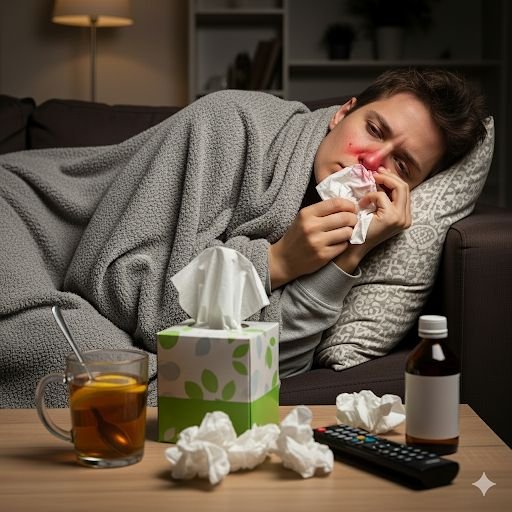
The problem is that cytokine levels do not snap back to baseline the moment the pathogen is cleared. In some people, particularly after more aggressive infections, they remain elevated for weeks. Your immune system is still in a low-grade activated state even when nothing is actually being fought.
On top of that, there is emerging evidence pointing to mitochondrial dysfunction as a contributor to post-viral fatigue. Mitochondria are the energy-producing structures inside cells, and they take a hit from the oxidative stress generated during immune activation. Impaired energy production at the cellular level shows up as systemic exhaustion in practice.
And sleep, which is usually the primary recovery mechanism, often does not function normally after viral illness. The circadian disruption from fever and illness, combined with elevated cortisol from the stress response, leaves many people spending more time in bed but getting less restorative sleep. Rest without quality sleep is a much slower road.
2. What the Recovery Window Actually Looks Like
There is no universal timeline, but there are patterns.
For a mild to moderate cold or uncomplicated flu in an otherwise healthy adult, post-viral fatigue typically resolves within two to four weeks after acute symptoms clear. For moderate to severe influenza, respiratory viruses like RSV, or COVID-19, the window stretches to four to eight weeks in a significant proportion of people. A 2022 systematic review in JAMA Network Open found that roughly 30% of people who had COVID still reported fatigue at three months. For any viral illness that required hospitalization or significantly compromised someone’s baseline health, recovery can extend to several months.
The distinction that matters clinically is between fatigue that is improving and fatigue that is not.
| Feature | Typical Post-Viral Fatigue | Signs Worth Medical Evaluation |
|---|---|---|
| Duration | Weeks, with clear improvement trend | Months, plateaued or worsening |
| Pattern | Gradually less severe over time | Consistent or unpredictable |
| Exercise response | Tiring but recovery is normal | Symptoms significantly worse 12-48h after activity |
| Cognitive symptoms | Mild fogginess, generally clearing | Significant memory, word-finding, or concentration issues |
| Sleep quality | Disrupted but slowly normalizing | Persistently unrefreshing sleep |
| Daily function | Reduced but manageable | Substantially impaired work or social capacity |
The right column in that table describes a pattern sometimes referred to as post-exertional malaise (PEM), which is one of the hallmark features of myalgic encephalomyelitis / chronic fatigue syndrome (ME/CFS). A proportion of people who develop severe or prolonged post-viral fatigue, particularly following viral illnesses like COVID, EBV (mono), or enterovirus, go on to meet diagnostic criteria for ME/CFS. The exact mechanism is still being studied, but the pattern is established enough in the literature to take seriously.
If you are already noticing some of the immune system patterns described at Daily Health Updates in 3 Signs Your Immune System Is Weaker Than You Realize alongside the fatigue, that combination is worth bringing to a healthcare provider.
3. The Two Mistakes That Push the Timeline Out
Most people recovering from post-viral fatigue make at least one of these two errors. A lot of people make both.
Pushing through. The instinct to return to normal activity as quickly as possible is understandable. People have jobs, children, responsibilities that did not pause while they were sick. But post-viral fatigue has a specific response to overexertion that normal fatigue does not: pushing too hard too soon often results in a crash that sets recovery back by days, sometimes weeks. This is post-exertional malaise in action. Activity that would be trivial under normal circumstances, a 20-minute walk, a full day of desk work, a trip to the grocery store, can trigger a significant resurgence of symptoms 12 to 48 hours later. The body is signaling clearly. Recovery requires a genuine scaling back of activity, not just resting more while trying to maintain everything else.
The second mistake is underestimating how much stress slows the process. Chronic psychological stress keeps cortisol elevated, which suppresses immune regulation and prolongs the inflammatory response. People who return to high-demand environments immediately after illness consistently report longer recovery windows than those who manage to reduce their load. This is not about stress being “in your head,” it is about HPA axis activation having direct, measurable effects on immune function. The piece on whether stress alone can make you catch more viruses at Daily Health Updates gets into this mechanism, and it is directly relevant to why stress during recovery is not neutral.
4. What Supports Recovery Without Setting It Back
Pacing is the cornerstone. Not bed rest, not pushing through. Structured, graduated activity with deliberate rest built in.
The practical version of pacing looks like this: identify a level of activity that does not trigger post-exertional symptoms, settle into that baseline, and increase it by no more than 10 to 20% per week as tolerance builds. If symptoms worsen, scale back and stabilize before trying again. This sounds slow because it is slow. That is the point.
Sleep quality deserves specific attention here because people often conflate sleeping more with sleeping well. Post-viral fatigue recovery requires restorative sleep, meaning consistent sleep and wake times, a dark and cool environment, and minimal screen light in the hour before bed. The relationship between poor sleep and impaired immune recovery is well established, and if your sleep architecture is fragmented after illness you are working against yourself. The piece on what poor sleep actually does to immune defense covers this in depth.
Nutrition during recovery is an area where gaps are common, not from eating badly but from eating less during illness and not fully compensating afterward. Protein is essential for tissue repair and immune cell production. Iron and vitamin B12 deficiency both independently cause fatigue and are easy to develop during a period of reduced intake. Zinc supports immune resolution. And vitamin D, as covered in the earlier Daily Health Updates piece on vitamin D deficiency and winter illness, influences both the inflammatory response and recovery speed. Getting these checked if fatigue is prolonged is a reasonable and affordable step.
On movement: gentle walking or light stretching can support recovery when introduced carefully and gradually. Vigorous exercise, including runs, gym sessions, or intense cycling, is contraindicated during the acute post-viral window and should not be resumed until fatigue has substantially cleared for at least two consecutive weeks. The research on this is unambiguous, and it is one area where popular advice (“just get moving, it’ll help”) is specifically wrong for this condition.
Post-viral fatigue does not require a specific diagnosis to be taken seriously. If you are several weeks out from an infection and still not back to baseline, that is a legitimate physiological state and not a willpower problem. The timeline varies, the mechanism is real, and the recovery strategies that work are the ones that work with the biology, not against it.
Frequently Asked Questions
Is it normal to still be exhausted four weeks after the flu?
Yes, for many people it is. Four weeks falls within the typical subacute recovery range for moderate influenza, particularly if the illness was more severe than average or if you returned to full activity too quickly during recovery. The key question is whether you are improving, even slowly. If fatigue at week four is clearly less than it was at week two, you are on a normal trajectory. If it is the same or worse, that is worth a clinical conversation.
How do I know if this is post-viral fatigue or just being out of shape?
Post-viral fatigue has a distinct onset: it begins during or immediately after a specific illness and does not predate it. It also tends to feel qualitatively different from fitness-related tiredness. It is heavier, more systemic, and often accompanied by cognitive symptoms or an inability to recover from activity normally. Someone who was fit and active before their illness and is now struggling with basic tasks they used to find easy is experiencing something mechanistically different from deconditioning.
Does COVID cause worse post-viral fatigue than other viruses?
The data suggests yes, on average. COVID has demonstrated a higher rate of prolonged fatigue compared to pre-pandemic influenza, with some studies pointing to unique mechanisms including viral persistence in tissue reservoirs, microbiome disruption, and more pronounced autonomic nervous system effects. That said, severe flu, EBV, and other viral illnesses also produce significant and prolonged post-viral fatigue. The COVID comparison is relevant context, not a reason to dismiss fatigue from other infections as less serious.
Can this turn into ME/CFS?
A proportion of people with prolonged post-viral fatigue do go on to develop ME/CFS, particularly when the original illness was severe and the post-exertional malaise pattern is present. The prevalence estimate varies widely across studies, but most post-COVID research places the rate of ME/CFS-like presentations at roughly 10 to 20% of those with long-term symptoms. The path to ME/CFS is not inevitable, and early management that includes pacing and avoiding overexertion appears to reduce risk. Anyone with fatigue lasting beyond three months alongside post-exertional malaise, unrefreshing sleep, and cognitive symptoms should be evaluated by a clinician familiar with the diagnostic criteria.
Should I take supplements to speed up recovery?
Supplements are worth considering when there is a specific nutritional gap to address, not as a shortcut. Vitamin D, zinc, magnesium, B12, and iron are the most commonly relevant deficiencies in post-viral recovery. A basic blood panel can identify whether any of these are actually low, which makes supplementation targeted rather than speculative. Megadosing supplements without a deficiency to correct offers minimal benefit and, in the case of some fat-soluble vitamins, carries risk. Food-first, test when possible, supplement specifically.